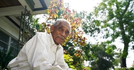

Reverend Penn Brooke Braddock (also recorded as Pembrooke B. Braddock, P. B. Braddock, and Rev. Pembrooke B. Braddox) (1848–1898)
Presiding Elder, Church Builder, and Prince Hall Masonic Leader in Reconstruction-Era Jacksonville
By Jerry Urso — JWJ Branch of ASALH
A Minister of the Reconstruction Generation
Rev. Penn Brooke Braddock, born in Florida in 1848, belonged to the generation of African Methodist Episcopal clergy whose leadership emerged directly from the opportunities and responsibilities created by emancipation. These ministers did more than preach—they organized congregations, secured land, supervised schools, strengthened fraternal institutions, and helped anchor newly freed communities into stable civic life. In Jacksonville and especially in LaVilla, Rev. Braddock became one of those early builders whose work helped transform fragile Reconstruction-era worship societies into permanent denominational institutions. [1]
By the early 1880s he had already assumed a recognized place within the East Florida Conference of the African Methodist Episcopal Church, where he would rise quickly into district-level authority during a formative period in the church’s expansion across Northeast Florida.
Pastor of St. Paul A.M.E. Church and Builder of the First Brick A.M.E. Sanctuary in Florida
Rev. Braddock’s most enduring contribution came through his pastorate at St. Paul A.M.E. Church in LaVilla. In 1883, under his leadership, the congregation erected what is remembered in church history as the first masonry African Methodist Episcopal church building constructed in the State of Florida. [2]
This achievement represented far more than a construction milestone. In the decades immediately following emancipation, most Black congregations worshiped in frame structures or borrowed spaces. The erection of a permanent brick sanctuary signaled stability, permanence, and institutional confidence within Jacksonville’s rapidly growing African American population. The building stood as a visible declaration that the A.M.E. Church intended not merely to exist in Florida—but to endure.
Church historical tradition further preserves that Rev. Braddock and members of his household contributed materially toward the building effort, reflecting a common pattern among Reconstruction-era pastoral families who frequently invested personally in the survival of their congregations. [2]
Within LaVilla—already emerging as a center of Black enterprise, education, and fraternal leadership—the new sanctuary helped anchor St. Paul A.M.E. Church as one of the neighborhood’s defining institutions.
Rise to Presiding Elder of the Jacksonville District
Rev. Braddock’s leadership extended beyond a single congregation. By 1889, he had been elevated to the office of Presiding Elder of the Jacksonville District of the East Florida Conference.
A contemporary report describing district proceedings recorded:
Rev. P. B. Braddock, presiding elder of the district presided. [3]
Within the structure of the African Methodist Episcopal Church, the Presiding Elder functioned as the bishop’s administrative representative across a regional territory. The office carried responsibility for supervising pastors, coordinating quarterly conferences, assisting congregational organization, and strengthening the denominational infrastructure across multiple counties.
His elevation to this position confirms that he stood among the most trusted and influential ministers of the East Florida Conference during the late nineteenth century.
Leadership at Mt. Olive A.M.E. Church
During the early 1890s Rev. Braddock served as pastor of Mt. Olive A.M.E. Church, another of Jacksonville’s principal congregations within the conference network.
Newspaper reporting repeatedly identified him in that role:
Rev. P. B. Braddock, pastor. [4]
Even while serving Mt. Olive, he continued assisting services at St. Paul A.M.E. Church, demonstrating his continued influence across Jacksonville’s interconnected congregational structure:
Rev. P. B. Braddock assisting. [5]
Such overlapping responsibilities were typical of Presiding Elders supervising expanding districts during the church-building era of the 1880s and 1890s.
Episcopal Reception Committees and Conference Organization
Rev. Braddock’s presence in conference-level leadership becomes especially visible through his participation in episcopal reception committees and district coordination events. He served on committees welcoming Bishop T. M. D. Ward, one of the denomination’s leading episcopal figures during the period. [6]
These receptions were not merely ceremonial occasions. They represented moments of organizational planning and denominational direction, often determining pastoral assignments and conference priorities across entire regions of the state.
He also participated in organizing camp-meeting activities, revival gatherings that functioned simultaneously as spiritual assemblies and administrative coordination centers for the East Florida Conference. [7]
Through these activities Rev. Braddock helped shape the developing structure of African Methodist Episcopal life in Northeast Florida.
Support of Divinity High School and the Foundations of Edward Waters College
Rev. Braddock’s influence extended beyond church construction into educational development. He assisted Rev. W. P. Ross in the erection of the building associated with Divinity High School, one of Jacksonville’s earliest institutions for advanced African American education.
Divinity High School later developed into Edward Waters College, today Edward Waters University, one of Florida’s oldest historically Black institutions of higher learning. [9]
The participation of district-level clergy such as Rev. Braddock in the school’s early development reflects the close partnership between the A.M.E. Church and educational advancement during Reconstruction-era institutional expansion.
Prince Hall Masonic Leadership in Harmony Lodge No. 1
Rev. Braddock also held membership and leadership responsibilities within Harmony Lodge No. 1, one of Jacksonville’s earliest Prince Hall Masonic lodges and a cornerstone institution of LaVilla’s civic infrastructure.
Proceedings of the Most Worshipful Union Grand Lodge of Florida confirm his presence among the lodge’s membership and leadership structure during the late nineteenth century. [8]
Harmony Lodge functioned as a parallel institution to the African Methodist Episcopal Church in supporting education, mutual aid, leadership training, and civic coordination within Jacksonville’s African American community. Ministers frequently served as both pastors and lodge officers, and Rev. Braddock’s participation reflects this shared institutional culture of Reconstruction-era Black leadership.
Marriage and Partnership in Institutional Church Building
Rev. Braddock married Ada Williams Braddock, daughter of Samuel and Violet Williams, members of one of the early St. Paul A.M.E. organizing households in LaVilla. Through this marriage he became connected to a family already central to the development of African Methodist Episcopal institutional life in Jacksonville.
During the construction of the 1883 brick sanctuary, church tradition records that Rev. Braddock and his household contributed materially toward the building effort. Their participation reflects the pattern of pastoral families functioning as institutional anchors during the formative decades of Black church construction following emancipation. [2]
Continued Ministry Activity Across Jacksonville’s A.M.E. Network
During the early 1890s Rev. Braddock remained active across Jacksonville’s district-level conference network.
Newspaper records document his participation in:
district services at Mt. Zion A.M.E. Church [10]
camp-meeting organization committees [7]
conference anniversary observances and congregational programs [11]
By 1895, he again appears identified as pastor of St. Paul A.M.E. Church, indicating a return to leadership of the congregation later in his ministry. [12]
These repeated appearances confirm his continuing influence across Jacksonville’s African Methodist Episcopal institutional network during the final decade of the nineteenth century.
Death and Burial
Rev. Penn Brooke Braddock died on September 22, 1898, in Duval County, Florida. He was buried at Mount Hermon Cemetery, one of Jacksonville’s principal nineteenth-century African American burial grounds and resting place of several Reconstruction-era religious leaders. [1]
Legacy in Jacksonville’s Reconstruction-Era Institutional Landscape
Rev. Penn Brooke Braddock belonged to the generation of ministers who transformed Jacksonville’s African Methodist Episcopal congregations into permanent institutions supported by property ownership, district organization, educational partnerships, and fraternal cooperation.
His contributions included:
leadership in constructing Florida’s first masonry A.M.E. sanctuary (1883) [2]
service as Presiding Elder of the Jacksonville District (1889) [3]
pastorates at St. Paul A.M.E. and Mt. Olive A.M.E. Churches [4][12]
participation in episcopal reception committees and camp-meeting organization [6][7]
leadership within Harmony Lodge No. 1 (Prince Hall Masonry) [8]
support of Divinity High School, later Edward Waters College [9]
Together with ministers such as W. P. Ross, John R. Scott, Joseph E. Lee, and Samuel H. Coleman, he helped establish Jacksonville as one of the principal centers of African Methodist Episcopal institutional development in nineteenth-century Florida. [3][4][7][9]
References
[1] Mount Hermon Cemetery burial record, Jacksonville, Duval County, Florida.
[2] St. Paul A.M.E. Church historical record, Jacksonville, Florida.
[3] Florida Times-Union (Jacksonville), June 2, 1889.
[4] Evening Times-Union (Jacksonville), April 29, 1893.
[5] Evening Times-Union (Jacksonville), November 11, 1893.
[6] Evening Times-Union (Jacksonville), April 1, 1893.
[7] Evening Times-Union (Jacksonville), August 16, 1894.
[8] Proceedings of the Most Worshipful Union Grand Lodge of Florida, 1886.
[9] East Florida Conference tradition concerning Divinity High School / Edward Waters College origins.
[10] Florida Times-Union (Jacksonville), November 25, 1893.
[11] Evening Times-Union (Jacksonville), October 5, 1895.
[12] Evening Times-Union (Jacksonville), November 23, 1895.
