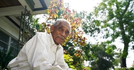

FROM PLAYGROUNDS TO THE PULPIT
The Life of Harold “Buster” Hair
By Jerry Urso JWJ Branch of ASALH
Durkeeville and the First Sound of the Bat
Nine-year-old Harold Hair stood outside the dugout fence at Durkee Field and breathed in the clay dust rising beneath a runner’s cleats. The Jacksonville Red Caps were playing, and as the crowd surged with excitement, something permanent settled inside him. He would later describe that moment simply: “That’s when the bull bit me” [1].
Durkeeville in the late 1930s was not merely a Black neighborhood in Jacksonville. It was a contained civic world shaped by segregation but sustained by discipline, church life, extended family, and community pride. Durkee Field — now known as J.P. Small Memorial Stadium — stood as one of the South’s most important Negro League venues [2]. From 1938 to 1942, the Jacksonville Red Caps played there as part of the Negro American League structure [3].
Hair’s grandfather carried him to games beginning when he was four years old [4]. By ten, he was playing for the Durkeeville All-Stars [5]. Not long after, he became bat boy for the Red Caps, placing him within arm’s reach of professional Black ballplayers at a time when Major League Baseball still barred them [3].
Walter “Skin Down” Robinson, second baseman for the Red Caps from 1937 to 1944, became one of his early mentors [6]. Robinson corrected his stance, sharpened his glove work, and insisted that discipline separated dreamers from professionals.
The boy behind the fence began to understand the game not as recreation, but as structure.
Stanton High and Collegiate Formation
Hair attended Stanton High School in Jacksonville and graduated in 1949 [7]. There he developed into a dependable contact hitter with steady defensive instincts. His athletic ability earned him a scholarship to North Carolina Agricultural and Technical State University in Greensboro [8].
At A&T, he played on four consecutive championship-winning teams [8]. His senior year he served as team captain [9]. Leadership at a historically Black college during the early 1950s meant more than athletic responsibility. It required academic seriousness and community representation.
Hair completed his undergraduate degree and later earned a Master’s in Education from the University of Florida with a 3.58 GPA, earning Dean’s List recognition [10].
Education would become as central to his life as baseball.
The Birmingham Black Barons
In 1953, Hair signed with the Birmingham Black Barons of the Negro Leagues [11]. As a rookie that same season, he was selected for the East–West All-Star Game [12]. The East–West Game represented the highest stage of Negro League talent and routinely drew tens of thousands of spectators.
Life in the Negro Leagues, however, was defined by endurance. Hair’s first contract paid $250 per month [13]. Players received approximately $2 to $2.50 per day in meal money [14]. Teams traveled primarily by bus, sometimes pushing broken-down vehicles up hills when mechanical failures occurred [15]. Hotels frequently refused lodging based on race [16]. Gas stations denied restroom access [16].
Hair remembered being called racial slurs in hostile environments but continued to play with composure [16].
At the plate, he relied on patience. In one early professional at-bat, facing pressure to prove himself, he whispered, “Lord, send me one I can see,” and drove the pitch for a triple [17].
He played third base, shortstop, and outfield. Versatility kept him in the lineup.
Kansas City and the Height of the Bat
After military interruption and continued development, Harold “Buster” Hair joined the Kansas City Monarchs, one of the most storied franchises in Negro League history, playing from 1955 through 1958 [18]. The Monarchs were not merely competitive; they were institutional pillars of Black professional baseball. To wear that uniform was to inherit expectation.
By the mid-1950s, the landscape of Black baseball was shifting. Jackie Robinson had integrated Major League Baseball in 1947 [19]. Scouts increasingly siphoned top Black talent into Major League farm systems, leaving Negro League rosters thinner but still fiercely competitive. Players who remained were seasoned, disciplined, and determined.
Hair fit that description precisely.
He rotated between third base, shortstop, and the outfield, demonstrating versatility that managers valued on long road trips with limited rosters [18]. Teammates later recalled his steady glove and disciplined approach at the plate. He was not flamboyant. He was controlled.
The 1958 season would become the statistical pinnacle of his career. That year he led the Negro Leagues in batting average, with figures reported between .355 and .432 depending on record systems, though Kansas City sources recorded him at .423 [20]. Even at the lower figure, .355, he would have led most professional leagues of the era.
The significance of that season extended beyond the number itself. The Negro Leagues were operating in a period of financial instability as integration redirected talent streams. To lead the league in hitting during that transitional moment required consistency under uncertainty.
Hair later remembered sitting in dugouts alongside players whose names would eventually become part of baseball’s permanent canon. He shared space with Roy Campanella and Ernie Banks during exhibition circuits and integrated league interactions [21]. He spoke of Jackie Robinson’s presence as commanding silence without instruction [22]. When Robinson entered a clubhouse, he recalled, conversation stopped. It was not fear. It was reverence.
Hair also played in Yankee Stadium, standing on the same field that had once hosted Babe Ruth [23]. The irony was not lost on him. The stadium that symbolized American baseball’s grandeur had excluded men of his generation only years earlier.
Still, the Major League contract he pursued never materialized.
He was invited to spring training in 1956 by a scout affiliated with the St. Louis Cardinals organization and briefly played 14 games with the Hamilton Red Wings of the Pennsylvania-Ontario-New York League, batting .273 with four RBIs [24]. The opportunity suggested proximity to integration’s expanding door. Yet proximity is not guarantee.
His one lasting regret, expressed consistently in later interviews, was that he never reached “the show” — the Major Leagues [25].
But regret did not define his life. Discipline did.
The Korean Conflict
In 1954, his professional momentum paused when he received notification to report for duty in the United States Army during the Korean Conflict [26]. The draft came during a period when the armed forces were undergoing desegregation following President Harry S. Truman’s Executive Order 9981 of 1948 [27]. Official integration did not erase social tension, but it did mark structural change.
Hair served with the 64th Infantry [26]. Military life demanded punctuality, hierarchy, and resilience. Barracks replaced locker rooms. Formation drills replaced batting practice. Yet the same steadiness that carried him through Negro League travel carried him through service.
He also played baseball for the 64th Infantry team during his enlistment [28]. Military baseball functioned as morale reinforcement during wartime, offering structured recreation to soldiers facing global uncertainty.
Service deepened his discipline. It clarified hierarchy. It reinforced the value of consistency. When he returned home, he was not simply resuming baseball; he was returning as a veteran shaped by national duty.
Scholar and Educator
Following his military service and professional playing years, Hair committed himself fully to education. He completed his academic work and earned a Master’s degree in Education from the University of Florida with a 3.58 GPA, earning placement on the Dean’s List [10].
Education, for Hair, was not a fallback. It was parallel preparation.
He returned to Jacksonville and joined the Duval County Public Schools system [29]. What followed would shape his legacy as profoundly as any batting title.
The Coach in the Gymnasium
When Harold “Buster” Hair returned to Jacksonville and entered the Duval County Public Schools system, he stepped into an educational environment undergoing structural transition. The civil rights movement was reshaping expectations. Integration was altering school demographics. Resources were uneven, and leadership within Black schools required steadiness and credibility.
Hair brought both.
At William M. Raines High School, he became the first Black head basketball coach [30]. That role carried symbolic and practical weight. Leadership in athletics during the 1960s and 1970s was not confined to sport; it functioned as community representation. Coaches were often the most visible adult male figures in the lives of young athletes.
Hair’s practices were structured and demanding. Conditioning sessions were deliberate. Defensive drills were repeated until players responded instinctively. He believed stamina produced composure and composure produced victory. His experience in the Negro Leagues had taught him that fatigue revealed weakness. His military service had reinforced that preparation prevented collapse.
Former players later described him as firm but deeply invested. If a player struggled academically, practice participation was withheld until improvement occurred. If a player lacked transportation or food, assistance was provided quietly [31]. His approach extended beyond the scoreboard.
Under his leadership, Raines achieved city and regional championships [32]. The victories reflected not only athletic talent but disciplined preparation. Yet when discussing his coaching years, Hair did not emphasize trophies. He emphasized trajectory.
Among those who played under him were future professionals, including Harold Carmichael, Ken Burrough, and Leonard Robinson [33]. Their professional achievements validated his program’s intensity. Yet former players consistently pointed to his mentorship rather than his win-loss record.
R.B. Holmes, who later became a pastor and civic leader, publicly credited Hair for shaping his discipline and personal responsibility during his formative years [34]. That testimony illustrates the broader scope of Hair’s influence.
He later served as assistant principal and athletic director at Douglas Anderson School (formerly Douglas Anderson #107) [35]. Administrative leadership required measured judgment. Policy replaced playbooks. Scheduling replaced strategy boards. Yet his method remained consistent: structure first, fairness second, accountability always.
Remembering the Road
Even while shaping young athletes in Jacksonville, Hair remained a living archive of Negro League baseball. During a 2010 gathering of Negro League veterans in Ocala, he shared recollections of life on the road, including the realities of limited meal money and unreliable transportation [14][15]. He spoke candidly about the need to conserve food allowances and the experience of pushing broken-down buses up steep grades.
He also addressed the decline of baseball participation within Black communities. Equipment costs had risen. Neighborhood leagues had diminished. Facilities were unevenly distributed. “Baseball is almost extinct in the Black communities,” he observed during that event [36].
He attributed his own development to consistent family support, stating that his grandmother brought him to the ballpark daily during his childhood [36]. That generational continuity, in his view, was essential to sustaining the sport.
In interviews conducted at JP Small Memorial Stadium in later years, he revisited his early days at Durkee Field, recalling his first professional contract of $250 per month and $2 daily meal stipends [13][14]. His memory remained precise. He did not romanticize hardship. He contextualized it.
The Pulpit and Personal Trial
Parallel to his educational leadership, Hair’s spiritual life deepened within St. John's Missionary Baptist Church, where he and his wife Emma were active members [37]. Over time, he became senior pastor.
The transition from athlete and coach to pastor was not abrupt. Both roles required moral authority and composure. His sermons often drew from athletic imagery, using baseball metaphors to frame perseverance, discipline, and endurance. The ninth inning became a symbol of faith under pressure. Preparation became a reflection of prayer.
His pastoral years were marked by personal loss. Within eighty-nine days, he lost both his mother and his wife [38]. Later, his eldest daughter passed away [38]. These events profoundly affected him. Yet he continued to preach, attend community events, and mentor young people.
Congregants observed that his preaching matured in tone during these years. Grief did not silence him. It deepened his message.
Faith and discipline, in his life, were inseparable.
Recognition and Institutional Memory
For many Negro League players, recognition came late, if at all. Their careers unfolded in parallel to Major League Baseball but outside its statistical preservation. Incomplete record-keeping, uneven media coverage, and the gradual collapse of Negro League structures after integration left many achievements scattered across newspaper archives and oral histories.
Harold “Buster” Hair lived long enough to see those omissions corrected.
He was inducted into the Negro League Hall of Fame in acknowledgment of both his on-field excellence and his role in preserving the legacy of Black professional baseball [39]. The induction did not merely celebrate a batting average; it affirmed participation in a league that operated with discipline and professionalism during exclusion.
His contributions were further recognized through a formal legislative commendation issued by the Wisconsin Senate, honoring his lasting impact on Negro League baseball and American sports history [40]. That commendation placed his name within the governmental record, transforming lived experience into documented history.
Major League Baseball later honored him during a Negro Leagues tribute event, where he threw out the ceremonial first pitch [41]. The symbolism of that moment was profound. A player who once traveled segregated highways, denied lodging and basic accommodations, now stood on a Major League field formally recognized by the institution that had once barred players of his generation.
His alma mater, North Carolina Agricultural and Technical State University, inducted him into its Hall of Fame in 1996 in recognition of his four championship seasons and leadership as team captain [42]. That institutional acknowledgment linked his athletic success directly to his academic foundation.
By the final decade of his life, he was widely described as one of Jacksonville’s last living Negro League players [43]. Media interviews conducted at JP Small Memorial Stadium frequently returned to his childhood memories at Durkee Field and his reflections on the game’s evolution [1][44].
In 2025, his passing at age ninety-two marked the end of a living connection to Jacksonville’s Negro League era [45].
Fraternal Commitment
Beyond baseball, education, and ministry, Hair maintained steady involvement in fraternal life as a member of Washington Lodge No. 386 under the Most Worshipful Union Grand Lodge of Florida [46]. Prince Hall Freemasonry historically provided Black men with structured civic engagement, leadership development, and mutual support during periods of restricted access to broader institutions.
Hair did not confine his Masonic life to simple membership. He rose to serve as Worshipful Master of Washington Lodge No. 386, holding the office for several years and guiding the lodge through steady governance and disciplined administration. His leadership reflected both trust and capability, requiring him to preside over meetings, oversee ritual work, manage lodge business, and maintain harmony among the brethren. The structure of Masonic discipline aligned naturally with his broader character, reinforcing the same punctuality, accountability, and composure that defined his work in athletics and ministry.
That continuity extended within his family. His cousin, Valentino McBride Jr., followed in the Prince Hall tradition as a member of Oakland Lodge No. 65 and currently serves as the Right Eminent Grand Commander of Union Grand Commandery No. 22, Magnanimous Order of Knights Templar of the Commonwealth of Florida, Prince Hall Affiliated [47]. That office represents statewide leadership within the Templar body and carries substantial responsibility. The generational link between Hair’s steady lodge membership and McBride’s current executive leadership illustrates institutional continuity rather than isolated affiliation.
Final Measure
Harold “Buster” Hair’s life traced an arc that began behind a dugout fence in Durkeeville and extended through professional baseball, military service, educational leadership, pastoral ministry, and fraternal commitment.
He played for the Birmingham Black Barons in 1953 [11], joined the Kansas City Monarchs from 1955 through 1958 [18], led the league in batting average during the 1958 season [20], and briefly entered organized minor league baseball with the Hamilton Red Wings [24]. He served in the United States Army during the Korean Conflict with the 64th Infantry [26]. He coached and later administered within Duval County Public Schools [29][35], shaping the careers of future professional athletes [33]. He pastored at St. John’s Missionary Baptist Church [37]. He maintained active membership within Prince Hall Freemasonry [46].
He acknowledged one enduring regret: he never reached Major League Baseball [25]. Yet his life cannot be measured solely against that milestone. He lived long enough to witness Major League Baseball formally recognize Negro League statistics as part of its official historical record, affirming the legitimacy of the league in which he excelled [48].
His recollections of pushing buses uphill, conserving meal money, and competing in segregated stadiums remain part of Jacksonville’s civic memory [15][16][36]. His voice, calm and measured in interviews, conveyed experience without embellishment.
From playgrounds to the pulpit, his path did not fragment. It matured.
His life reflected structure under pressure, discipline without spectacle, and service that extended beyond applause.
REFERENCES
[1] Jennifer Graham interview profile
[2] JP Small Memorial Stadium historical archives
[3] Jacksonville Red Caps team history
[4] First Coast News interview, Kenneth Amaro, 2016
[5] Stanton High School alumni records
[6] Red Caps roster records, Walter “Skin Down” Robinson
[7] Stanton High School graduation record, 1949
[8] North Carolina A&T athletic records
[9] North Carolina A&T team captain designation
[10] University of Florida academic records
[11] Birmingham Black Barons roster, 1953
[12] East–West All-Star Game archives, 1953
[13] First professional contract recollection
[14] Ocala Star-Banner, Byron Saucer, 2010
[15] Negro League veteran bus breakdown recollection
[16] Discrimination accounts, Negro League interviews
[17] Professional debut recollection
[18] Kansas City Monarchs roster, 1955–1958
[19] Major League Baseball integration history
[20] 1958 Negro League batting records
[21] Dugout recollections with Roy Campanella and Ernie Banks
[22] Jackie Robinson clubhouse recollection
[23] Yankee Stadium exhibition appearance
[24] Hamilton Red Wings statistics, 1956
[25] First Coast News interview, 2016 regret statement
[26] U.S. Army service record, 64th Infantry
[27] Executive Order 9981 context
[28] Military baseball participation
[29] Duval County Public Schools employment record
[30] William M. Raines High School coaching record
[31] Former player testimonial accounts
[32] Raines High School championship record
[33] Professional athlete mentorship accounts
[34] R.B. Holmes public statements
[35] Douglas Anderson School administrative record
[36] Ocala Negro League Project remarks
[37] St. John’s Missionary Baptist Church records
[38] Family obituary notices
[39] Negro League Hall of Fame induction record
[40] Wisconsin Senate commendation
[41] Major League Baseball tribute event
[42] North Carolina A&T Hall of Fame induction
[43] Jacksonville media coverage identifying last living Negro Leaguer
[44] JP Small Memorial Stadium interview segment
[45] 2025 obituary record
[46] Washington Lodge No. 386 membership record
[47] Union Grand Commandery No. 22 leadership record
[48] Major League Baseball recognition of Negro League statistics
