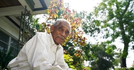

MATTHEW M. LEWEY AND THE ARCHITECTURE OF BLACK CITIZENSHIP
By Jerry Urso, FPS-Life
Grand Historian, Most Worshipful Union Grand Lodge of Florida
Preface
In the years after the Civil War, when most of the nation still denied Black citizenship, Matthew McFarlan Lewey walked through Florida’s public square carrying both the scars of battle and the tools of reconstruction. History remembers Josiah T. Walls, Ida B. Wells, and Booker T. Washington, but Lewey stood beside them, not behind them. A soldier, lawyer, newspaper editor, justice of the peace, and civic leader, he labored not only to survive Jim Crow but to build alternatives to it—institutions owned, defended, and narrated by Black Floridians themselves. His life was not simply a résumé of achievement; it was a sustained act of resistance through literacy, service, and communal uplift.
“It is not what we profess, but what we practice that makes us Masons,” and “To educate a person in mind and not in morals is to educate a menace to society.” These principles were not abstractions for Lewey. They were lived disciplines.
Early Life and Formation
Matthew McFarlan Lewey was born in Baltimore, Maryland, in December 1848, to Eliza (née McFarlin) and John W. Lewey [1]. Like many freeborn African Americans in the border and northern states, his early education was irregular and constrained by racial exclusion. At age sixteen, his family intervened decisively, sending him north to New York City to live with his aunt, Emeline Carter, and his maternal grandfather, the Rev. William McFarlin [2].
In New York, Lewey enrolled at African Free School No. 2, also known as the Mulberry Street School, one of the most important incubators of Black civic leadership in the antebellum North [3]. The school’s mission extended beyond literacy. It trained students for public responsibility, racial advocacy, and disciplined citizenship. Lewey’s exposure to this intellectual tradition framed education as a collective obligation rather than a private advancement.
This relocation marked the first decisive turning point in his life. Baltimore had offered survival; New York offered formation. The habits of study, discipline, and public purpose he acquired there would shape every phase of his later career.
Military Service and the Making of a Combat Veteran
Lewey’s education was interrupted by war. During the Civil War he left school to enlist in the 55th Massachusetts Infantry Regiment, one of the Union Army’s all-Black units [4]. He served as a color bearer, a position of exceptional danger. The color guard did not fight with rifles; they carried the regimental flag under fire, making them prime targets for Confederate marksmen.
At the Battle of Honey Hill in South Carolina, Lewey was so severely wounded that he was left for dead on the battlefield [5]. He survived only because his body was recovered and transported to De Camp General Hospital in New York, where he underwent a long and uncertain recovery. His survival placed him among a generation of Black veterans whose claims to citizenship rested not on theory but on sacrifice.
This experience forged the moral grammar of his public life. He had carried the flag through gunfire; afterward, he would carry principle through law, journalism, and civic leadership. His authority was not rhetorical. It had been earned at the edge of death.
Arrival in Florida and Community Leadership
In 1876 Lewey relocated to Newnansville, Florida, an early center of Black civic life in Alachua County [6]. He entered public service with remarkable speed. Between 1875 and 1877 he served simultaneously as postmaster, justice of the peace, and mayor of Newnansville, an extraordinary concentration of authority for a Black official in the post-Reconstruction South [7].
Although he would later complete formal legal studies at Howard University School of Law, Lewey was already functioning as a jurist and civic administrator. His offices were not ceremonial. As justice of the peace he exercised judicial authority in a period when the legitimacy of Black legal power was under constant attack.
What distinguished Lewey was not merely officeholding, but institution building. He understood that political rights without economic autonomy and narrative control were fragile. Even while serving in public office, he was laying the foundation for Florida’s Black press.
The Emergence of a Political Voice
Lewey entered statewide politics in 1883 when he was elected to the Florida House of Representatives from Alachua County [8]. He later served on the Gainesville City Council from 1886 to 1890 and again in 1891 [9]. His legislative service occurred during the waning years of Black political power in Florida, as white Democratic control reasserted itself through intimidation and legal restriction.
Lewey understood earlier than most that electoral office alone could not preserve Black citizenship. Votes could be suppressed; offices could be stripped away. Memory, however, could endure. Journalism would become his most durable instrument of resistance.
The Rise of a Newspaper Editor
Around 1885 Lewey partnered with Congressman Josiah T. Walls to publish The Farmers’ Journal, a newspaper designed to serve Black farmers and civic organizers outside the control of white publishers [10]. The paper fused agricultural advocacy with political education, reinforcing the idea that land, literacy, and law were inseparable pillars of freedom.
In 1887 Lewey founded The Gainesville Sentinel, one of Florida’s first enduring Black newspapers [11]. Through its pages he argued that local news was not marginal to democracy but foundational to it. The Sentinel addressed labor rights, legal reform, public morality, and Black self-help institutions, creating a public forum where African Americans could see themselves as civic actors rather than passive subjects.
The Florida Sentinel and the Architecture of Voice
By 1894 escalating racial hostility in Gainesville forced Lewey to relocate to Pensacola. There he reestablished his paper as The Florida Sentinel [12]. This was not retreat but strategic expansion. Pensacola’s position as a port city allowed the Sentinel to circulate across North and West Florida, transforming it into a statewide organ of Black civic life.
The Florida Sentinel functioned as more than a newspaper. It coordinated boycotts, public relief efforts, legal challenges, and business promotion. It preserved a psychological and political space where Black Floridians could articulate rights claims even as disfranchisement advanced.
Pensacola Boycott and Test of Principle
In 1905 the Florida Legislature enacted its first statewide Jim Crow streetcar segregation law. Pensacola’s Black community responded with disciplined economic resistance, coordinated in part through Lewey’s newspaper [13]. Riders refused to use segregated streetcars, wearing lapel buttons that read simply, “WALK” [14].
The boycott was not symbolic. It inflicted economic pressure and demonstrated collective discipline. Lewey framed the action as a constitutional challenge rather than a plea for accommodation.
Legal Resistance and the Black Bar in Florida
The legal significance of the boycott emerged in Patterson v. Florida (1905), when the Florida Supreme Court struck down the segregation statute for violating the Fourteenth Amendment due to its internally unequal racial classifications [15]. Lewey’s reporting transformed the ruling from a technical decision into a public constitutional lesson.
His coverage emphasized that the state could not claim legality while codifying hierarchy. The press became a vehicle for legal literacy, preparing Black communities to understand and defend judicial precedent.
Alliance with Fellow Masonic Jurists: Purcell and Wetmore
The Patterson decision laid groundwork for later litigation pursued by Black attorneys such as Isaac Lawrence Purcell and J. Douglas Wetmore, both Prince Hall Masons who challenged segregation and discriminatory prosecutions across Florida [16]. These jurists did not operate in isolation. They worked within a civic ecosystem Lewey helped construct, where journalism, fraternal networks, and legal strategy reinforced one another.
Lewey’s role was not to argue cases, but to frame them, interpret them, and transmit their meaning to the public. Newspapers supplied the evidentiary and intellectual soil from which litigation could grow.
Streetcar Segregation, Journalism, and the Law
When Pensacola attempted to reinstate segregation through municipal ordinance after the Patterson ruling, it was the Florida Sentinel that documented the maneuver and exposed its intent [17]. Lewey treated journalism as constitutional observation, preserving evidence of how white supremacy adapted through statutory revision rather than judicial defeat.
In this period he functioned less as an editor and more as a constitutional historian writing in real time.
Political Retaliation and Survival
Lewey’s prominence made him a target. White officials obstructed distribution of his paper, pressured advertisers, and undermined appointments. Yet he adapted strategically, relocating his operations rather than abandoning them [18]. Geography became a tactic, not a defeat.
Return to Jacksonville and Later Career
By the 1910s Lewey was a senior statesman of the Black press and a founding member of the Associated Negro Press in 1919 [19]. He spent his later years in Jacksonville, remaining active as a publisher and advisor until his death in 1935 [20]. His body was returned to Gainesville for burial at Mount Pleasant Cemetery, affirming his enduring connection to the community he had helped shape.
Legacy
Lewey’s greatest achievement was not any single office, but the civic infrastructure he built. As a veteran he supplied moral authority, as a jurist legal authority, and as a publisher narrative authority. Together these formed a durable architecture of Black citizenship.
His model—the soldier, the jurist, and the publisher—would later appear in figures such as A. Philip Randolph and Robert Meacham. In Florida, Lewey pioneered it first. Through disciplined strategy rather than spectacle, he demonstrated that rights could be defended through institutions that outlasted repression.
Modern Recognition and Memory
For much of the twentieth century Lewey’s name faded from mainstream accounts, even as his institutional legacy endured. Historian Paul Ortiz’s rediscovery of Lewey in the Frederick Douglass Papers in 1996 marked a turning point in public scholarship [21].
In 2024 the Alachua County Commission formally proclaimed December 18 as Matthew Lewey Day, reconnecting contemporary civic memory to Reconstruction-era institution building [22]. Public commemorations, digital timelines, and planned exhibits now carry forward the work Lewey himself once began: building memory as a form of citizenship.
References
[1] Ahern, Shannon. “A Forgotten Obituary: The Legacy of Sgt. Matthew M. Lewey.” The Independent Florida Alligator, July 28, 2020.
[2] Penn, Irvine Garland. The Afro-American Press and Its Editors. Willey & Company, 1891.
[3] Brown, Canter Jr. Florida’s Black Public Officials, 1867–1924. University of Alabama Press, 1998.
[4] Compiled Military Service Records, 55th Massachusetts Infantry Regiment, National Archives.
[5] Neyland, Leedell W. Twelve Black Floridians. Florida A&M University Foundation, 1970.
[6] McCarthy, Kevin M. African American Sites in Florida. Rowman & Littlefield, 2019.
[7] Florida Memory, “Captain Matthew M. Lewey’s Company Muster Roll,” April 1882.
[8] Brown, Canter Jr., legislative entries for Alachua County.
[9] Ahern, Shannon. “M. M. Lewey Timeline.” Independent Florida Alligator.
[10] Penn, Irvine Garland. The Afro-American Press and Its Editors.
[11] The Gainesville Sentinel, founding history.
[12] The Florida Sentinel Annual, 1904, UWF Digital Collections.
[13] Payne, Charles M., and Adam Green. Time Longer Than Rope. NYU Press, 2003.
[14] Thomas, Voleer. Gainesville Sun.
[15] Patterson v. Florida, 58 Fla. 54 (1905).
[16] Dogan, Reginald T. Pensacola News Journal, June 29, 2006.
[17] Pensacola City Council Records, October 1905.
[18] Florida Historical Quarterly, Vol. 50, No. 2 (1971).
[19] Associated Negro Press founding records, 1919.
[20] Independent Florida Alligator, obituary confirmation.
[21] Ortiz, Paul. Frederick Douglass Papers research, 1996.
[22] Alachua County Commission Proclamation, 2024.
