
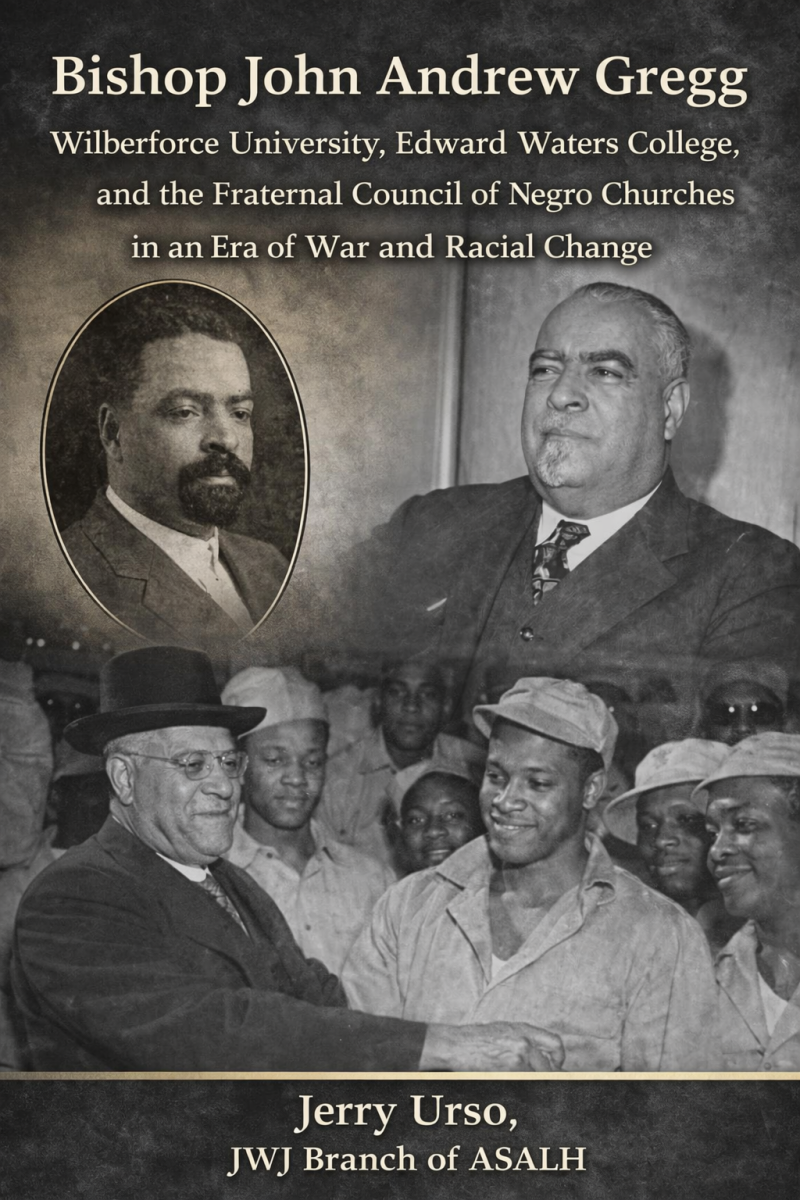
Bishop John Andrew Gregg
Wilberforce University, Edward Waters College, and the Fraternal Council of Negro Churches in an Era of War and Racial Change
Jerry Urso, JWJ Branch of ASALH
Introduction and Historical Importance
In the first half of the twentieth century, African American institutional leadership depended heavily upon individuals capable of moving between educational administration, denominational authority, national advocacy, and international mission work. Among the figures who embodied this multidimensional leadership tradition was Bishop John Andrew Gregg, a senior prelate of the African Methodist Episcopal Church whose career connected the Reconstruction-era Midwest to Jacksonville’s expanding Black educational institutions, the national leadership of Wilberforce University, overseas missionary activity in southern Africa, and federal consultation during the crisis years of the Second World War.
Gregg belonged to a generation of Black church leaders who functioned not only as religious authorities but also as diplomats of community interests at the national level. His work as president of Edward Waters College in Jacksonville placed him at the center of one of the South’s most important denominational training institutions during a period when church-supported colleges served as primary engines for the preparation of African American teachers and ministers. His later leadership of Wilberforce University, one of the most historically significant institutions within the African Methodist Episcopal educational system, confirmed his standing among the denomination’s most trusted administrators and positioned him for election to the episcopacy in 1924. [1]
As a bishop, Gregg’s responsibilities extended beyond church governance into national civic engagement. Through his leadership within the Fraternal Council of Negro Churches, he participated in coordinated efforts among major African American denominations to address racial violence, employment discrimination, and unequal treatment of Black servicemen during the Second World War. His role in a delegation of prominent Black clergymen meeting with President Franklin D. Roosevelt following the racial unrest surrounding the Beaumont riot of 1943 demonstrated the growing influence of African American church leadership in shaping wartime federal discussions concerning race relations and national unity. [2]
Gregg’s influence expanded still further when he was selected as one of the representatives of African American religious institutions sent overseas during the war to observe conditions affecting Black troops serving in both the European and Pacific theaters. These visits placed him among a small group of nationally recognized Black religious leaders entrusted with evaluating morale, treatment, and opportunity within the segregated armed forces at a time when military service and citizenship rights were becoming inseparable issues within the emerging civil-rights movement. His observations later appeared in his wartime account Of Men and Of Arms, a rare clerical perspective on the experiences of African American soldiers serving abroad. [3]
Yet Gregg’s national visibility during the war represented only one phase of a much longer institutional career that began in Reconstruction-era Kansas, developed through missionary work in southern Africa, and matured through educational leadership in Jacksonville and Wilberforce before culminating in episcopal authority within one of the most influential Black denominations in the United States. His life illustrates how African American church leaders of the early twentieth century operated simultaneously as educators, administrators, missionaries, and civil-rights advocates whose influence extended across both national and international boundaries.
Understanding the career of Bishop John Andrew Gregg therefore provides insight not only into the history of the African Methodist Episcopal Church, but also into the broader structure of Black institutional leadership during a period when church networks functioned as essential platforms for education, diplomacy, and political advocacy within African American communities across the United States and abroad.
Birth, Family Background, and Reconstruction-Era Kansas Roots
John Andrew Gregg was born on February 18, 1877, in the state of Kansas, during a generation shaped by the westward movement of formerly enslaved families and their descendants seeking security, education, and civic opportunity beyond the constraints of the post-Reconstruction South. His parents, Alexander (“Aleck”) Gregg, a native of Kentucky, and Eliza Gregg, born in Virginia, belonged to the migration stream that carried thousands of African Americans into Kansas during the decades following the Civil War. These migrants helped establish stable agricultural settlements, churches, schools, and civic institutions that formed the foundation of Black public life in the region during the late nineteenth century. [4]
The 1880 United States Census places the Gregg household in Eureka, Greenwood County, Kansas, where three-year-old John A. Gregg resided with his parents and his older brother Archy. The record identified his father as the head of household and confirmed the family’s residence in a developing Midwestern community shaped by Reconstruction-era settlement patterns. Although census enumerators classified the family using the term “mulatto,” this designation reflected federal racial recording conventions of the period rather than community identity and was commonly applied across large portions of the African American population in the late nineteenth century. The enumeration nevertheless provides one of the earliest documentary confirmations of Gregg’s place within a stable household environment that valued continuity and mobility in equal measure. [5]
Kansas occupied a distinctive position within African American history during the decades following the Civil War. Long associated with the antislavery struggle that preceded the conflict, the state became a destination for Black migrants seeking land ownership, educational access, and political participation. Communities such as those in Greenwood County provided opportunities unavailable in much of the South, including the possibility of independent farming, school attendance, and church leadership. The Gregg family’s presence in this environment placed young John Andrew Gregg within a social setting where education and institutional affiliation were widely regarded as essential tools for advancement and community stability.
Family continuity remained an important feature of Gregg’s life across subsequent decades. Later federal census records confirm that his mother, Eliza Gregg, continued to reside with him well into his adult professional career, including during his presidency of Edward Waters College in Jacksonville. This enduring household connection reflects a broader pattern common among African American religious leaders of the period, whose extended family networks frequently supported long careers involving travel, institutional administration, and denominational assignment across multiple states. [6]
Growing up within a Reconstruction-era Kansas household shaped by migration, stability, and institutional aspiration helped prepare Gregg for the leadership roles he would later assume in education, missionary work, and episcopal administration. His early environment connected him to one of the most important regional centers of Black civic development in the late nineteenth-century Midwest and formed the foundation upon which his later national career would be built.
Education in Kansas and Early Intellectual Formation
By the close of the nineteenth century, John Andrew Gregg had entered the educational environment that would shape his transition from the son of Reconstruction-era migrants in Kansas to a future leader within the African Methodist Episcopal Church. His early academic development unfolded in Lawrence, Kansas, one of the most historically significant centers of abolitionist activism and postwar educational reform in the American Midwest. The intellectual climate of Lawrence—home to reform institutions, denominational networks, and expanding opportunities for African American education—provided a setting in which Gregg’s preparation for ministry and institutional leadership took firm shape.
The 1900 United States Census documents Gregg residing with his parents in Lawrence while identified specifically as a student, confirming that he remained actively engaged in formal education at the turn of the century. The record lists his birth month as February 1877, consistent with later federal military documentation, and identifies his father Alexander Gregg and mother Eliza F. Gregg as members of the same household. This census entry demonstrates that Gregg’s educational progress took place within a stable family environment that supported his advancement at a time when access to higher education for African Americans remained limited across much of the country. [7]
Lawrence’s importance as an educational center was closely connected to the presence of the University of Kansas, where Gregg pursued collegiate study. Attendance at the university placed him within a generation of African American students who entered emerging Midwestern institutions during the late nineteenth century and prepared themselves for leadership roles in ministry, teaching, and public service. His presence there reflected both the opportunities available in Kansas and the determination of Black families such as the Greggs to secure educational advancement as a pathway toward institutional influence.
Contemporary newspaper reporting further confirms Gregg’s academic progress during this period. The Lawrence Journal, in its August 25, 1900 edition, recorded his completion of university study, providing documentary confirmation that he had successfully completed his collegiate training in Kansas at the close of the nineteenth century. This achievement marked an important milestone in his preparation for the educational and missionary responsibilities that would soon follow and placed him among the relatively small number of African American college graduates entering denominational leadership at the time. [8]
Gregg’s university education provided more than academic credentials. It also connected him to a wider network of African American intellectual and religious leadership emerging in the Midwest during the late nineteenth century. These networks would later support his transition into pastoral service, missionary assignment in southern Africa, and eventually educational administration at some of the most important institutions within the A.M.E. Church’s national system. His collegiate formation in Lawrence therefore represented a decisive stage in the development of the leadership capacities that would define his later career as a missionary educator, college president, and bishop within one of the most influential Black denominations in the United States.
Military Service and the Post–Spanish-American War Generation
The early adulthood of John Andrew Gregg coincided with a transitional moment in American military and civic life following the Spanish–American War and the expansion of United States influence beyond its continental borders. Like many African American men of his generation who came of age during the closing years of the nineteenth century, Gregg’s formative experiences included participation in military service that reflected both patriotic commitment and the broader tradition of Black civic engagement through national defense.
Federal veterans’ records confirm that Gregg entered military service on April 10, 1899, while residing in Kansas City, Kansas. This documentation places him among the generation of African American servicemen who served during the transitional period immediately following the Spanish–American War, when Black soldiers continued to demonstrate loyalty to the nation despite persistent racial discrimination within the armed forces. Military service during this era carried particular significance within African American communities, where participation in national defense was widely understood as both a civic responsibility and a claim upon the promises of citizenship following Reconstruction. [9]
Kansas itself played an important role in the history of African American military participation during the late nineteenth century. Units raised in the state included volunteer regiments formed during the Spanish–American War era, and African American enlistment in these formations reflected longstanding traditions of service dating back to the American Civil War. Although Gregg would later become known primarily as an educator, missionary, and bishop within the African Methodist Episcopal Church, his early military service connected him to a broader generation of Black leaders whose public authority rested in part upon demonstrated commitment to national service.
Participation in the military during this period also helped prepare many African American leaders for responsibilities requiring mobility, discipline, and institutional coordination—qualities that would later characterize Gregg’s work in missionary education and denominational administration. His service formed part of the foundation upon which he built a career that would eventually extend from Kansas to Jacksonville, Wilberforce, Ohio, southern Africa, and national advisory roles during the Second World War.
Gregg’s veteran status remained visible decades later. The 1930 United States Census identified him explicitly as a veteran, confirming that his military service continued to be recognized as part of his public identity even after his election to the episcopacy of the A.M.E. Church. This continuity illustrates how military experience formed an enduring component of the credibility of leadership among African American institutional figures of the early twentieth century, particularly those who later assumed national roles in education, ministry, and civil rights advocacy. [10]
Marriage and Early Ministerial Development in the African Methodist Episcopal Church
As John Andrew Gregg entered the twentieth century, his transition from student and veteran into denominational leadership unfolded within the expanding institutional structure of the African Methodist Episcopal Church, one of the most influential religious bodies serving African American communities in the United States and abroad. His early ministerial formation reflected the denomination’s longstanding emphasis on education, missionary service, and disciplined pastoral leadership as pathways to broader ecclesiastical responsibility.
During these formative years, Gregg married Celia A. Gregg, whose presence appears consistently in federal census documentation across multiple decades of his career. Their marriage formed a stable partnership that accompanied his movement through successive assignments in education, pastoral leadership, and episcopal administration. In 1900, Gregg remained listed as unmarried in the Lawrence, Kansas census enumeration while completing his education, but by the time of his later institutional leadership appointments his household included Celia as his wife and companion in denominational service. Her presence in subsequent census records—including the 1920 Jacksonville enumeration, where Gregg was recorded as president of Edward Waters College—demonstrates the continuity of their household across major transitions in his career. [11]
Gregg’s entry into ministry occurred during a period when the A.M.E. Church continued to expand its influence across both northern and southern regions of the United States. Ministers of the denomination frequently combined pastoral duties with educational responsibilities, missionary preparation, and civic engagement within African American communities. Gregg’s collegiate training in Kansas, together with his military service and developing reputation within denominational circles, positioned him well for advancement within this system of leadership development.
The early twentieth century represented a moment of institutional consolidation for the A.M.E. Church as it strengthened its educational network and expanded missionary work beyond the United States. Ministers demonstrating administrative ability and academic preparation were often selected for responsibilities extending beyond local congregational assignments. Gregg’s emerging leadership profile placed him within this category of rising denominational figures whose careers would soon extend into international mission service as well as higher educational administration.
This combination of education, pastoral formation, and stable family support prepared Gregg for one of the most consequential assignments of his early career: missionary educational work in southern Africa. That appointment would mark the beginning of his transition from regional ministerial leadership in the American Midwest to international service within the global structure of the A.M.E. Church and would establish his reputation as an educator capable of directing major institutional efforts beyond the United States.
Missionary Service in South Africa and Leadership at Chatsworth Institute
One of the most formative chapters in the early career of John Andrew Gregg began when he entered international missionary service under the direction of the African Methodist Episcopal Church in southern Africa. At the turn of the twentieth century, the A.M.E. Church had established a strong and expanding presence across the African continent, particularly in the South Africa region, where denominational leaders operated schools, churches, and training institutions designed to prepare ministers and teachers for service throughout the connection. Gregg’s assignment to this work marked his transition from regional ministerial leadership in the American Midwest to participation in one of the denomination’s most important international educational initiatives.
During his missionary service, Gregg became associated with the Chatsworth Institute, where he served as a principal and educational administrator. Institutions such as Chatsworth played a critical role in the A.M.E. Church’s strategy for expanding literacy, teacher training, and religious leadership among African populations during a period when missionary education represented one of the most effective avenues for institutional development across southern Africa. Gregg’s appointment to this position reflected denominational confidence in his academic preparation and administrative ability following his collegiate training in Lawrence, Kansas. [12]
Missionary educators in southern Africa were expected to fulfill responsibilities extending well beyond classroom instruction. Principals of church-supported institutes frequently supervised teacher training programs, organized congregational development in surrounding districts, and coordinated educational policy with episcopal leadership responsible for the wider mission field. Gregg’s work at Chatsworth therefore placed him within a network of transatlantic religious educators whose efforts helped establish long-term institutional connections between African American denominations and African Christian communities during the early twentieth century.
Service in South Africa also strengthened Gregg’s reputation within the denomination as a leader capable of directing complex institutional programs under challenging conditions. Missionary educators operated within environments shaped by colonial administrative structures, limited financial resources, and the logistical demands of building educational systems across geographically dispersed communities. Experience gained in this setting prepared Gregg for later responsibilities supervising major colleges within the A.M.E. Church’s American educational system, including his subsequent presidencies at Edward Waters College and Wilberforce University.
Equally important, Gregg’s South African service connected him to the global vision that characterized A.M.E. leadership in the early twentieth century. The denomination’s missionary program sought not only to expand church membership but also to develop educational institutions capable of sustaining indigenous leadership. Participation in this effort placed Gregg among a generation of African American ministers whose authority rested in part upon international experience within the church’s expanding overseas districts. That experience would later contribute to his credibility as an educational administrator and ultimately support his election to the episcopacy in 1924. [13]
Pastoral Leadership in Kansas and Missouri and the Emergence of a Denominational Educator
Following his return from missionary service in South Africa, John Andrew Gregg resumed ministerial work within the United States at a moment when the African Methodist Episcopal Church was expanding its institutional footprint across both northern and border-state communities. His pastoral assignments in Kansas and Missouri formed an important transitional phase in his career, linking his earlier educational formation and missionary experience to the administrative leadership responsibilities that would soon bring him to the presidency of Edward Waters College in Jacksonville.
During the early twentieth century, A.M.E. ministers serving in Kansas and Missouri operated within communities shaped by migration, industrial expansion, and the continuing movement of African Americans from rural areas into developing urban centers. Churches in these regions functioned not only as places of worship but also as centers of education, mutual aid, and civic organization. Ministers were expected to serve as community advocates as well as religious leaders, helping congregations navigate employment conditions, housing challenges, and educational opportunities during a period of rapid social change. Gregg’s experience in these pastorates strengthened his reputation as a disciplined organizer and capable institutional leader within the denomination. [14]
His missionary background distinguished him among his contemporaries and contributed to his growing visibility within denominational circles. Ministers who had served overseas missions were often viewed as particularly well prepared for administrative leadership because they had demonstrated the ability to manage educational institutions, supervise large districts, and coordinate programs across culturally diverse communities. Gregg’s service at Chatsworth Institute therefore enhanced his standing within the church and positioned him for responsibilities extending beyond the local pastorate.
At the same time, the A.M.E. Church continued to strengthen its educational network across the South, recognizing the importance of teacher training and ministerial preparation for sustaining institutional growth. Leaders capable of combining pastoral experience with administrative skill were increasingly called upon to guide church-supported colleges that served as centers of intellectual formation for African American communities. Gregg’s combination of university training in Lawrence, Kansas, missionary leadership in southern Africa, and pastoral service in the Midwest placed him squarely within this emerging group of denominational educators whose influence extended beyond the pulpit.
By the second decade of the twentieth century, Gregg had established a reputation within the A.M.E. connection as a minister capable of directing educational institutions during a period when church colleges played a central role in shaping African American leadership throughout the United States. This reputation soon led to his selection as president of Edward Waters College in 1913, marking the beginning of one of the most consequential administrative chapters of his career and his first major institutional leadership assignment within the southeastern jurisdiction of the church. [15]
Presidency of Edward Waters College and Educational Leadership in Jacksonville
In 1913, John Andrew Gregg was elected president of Edward Waters College, marking his transition from regional pastoral leadership and missionary educator to one of the principal institutional administrators within the African Methodist Episcopal Church educational system. His selection reflected denominational confidence in a leader whose experience combined university training in Lawrence, Kansas, missionary service in South Africa, and pastoral leadership in the Midwest during a period when church-supported colleges functioned as the primary training centers for African American teachers and ministers across the South.
Gregg assumed leadership of Edward Waters during a period of institutional rebuilding and expansion in Jacksonville, a city that had undergone profound transformation following the Great Fire of Jacksonville. In the years after the fire, Jacksonville emerged as one of the most important centers of African American education, commerce, and religious organization in Florida. Within this environment, Edward Waters College served as a vital denominational institution responsible for preparing ministers, teachers, and civic leaders who would serve congregations throughout the southeastern jurisdiction of the A.M.E. Church.
Federal census documentation confirms Gregg’s role as president during this period. The 1920 United States Census recorded him residing at 2316 Kings Street in Jacksonville and identified his occupation explicitly as “President, Edward Waters College.” The same record listed his wife Celia A. Gregg and his mother Eliza Gregg as members of the household, demonstrating both his institutional position and the continuity of family support that accompanied his administrative career. The enumeration further recorded that the residence was owned and free of mortgage, reflecting a level of economic stability associated with senior leadership positions within denominational educational institutions during the early twentieth century. [16]
Gregg’s presidency placed him within a network of prominent African American educators shaping the development of church-related higher education across Florida and the wider South. Among these contemporaries was Mary McLeod Bethune, founder of what would become Bethune-Cookman College, whose work paralleled the educational mission of A.M.E. institutions across the state. Together, leaders such as Gregg and Bethune represented a generation committed to expanding teacher training opportunities at a time when access to higher education for African Americans remained sharply restricted across much of the region.
As president of Edward Waters College, Gregg supervised programs designed to prepare ministers and teachers capable of serving throughout the denomination’s expanding network of congregations and schools. Church-supported colleges such as Edward Waters functioned not only as academic institutions but also as centers of leadership development within African American communities, and their presidents frequently served as representatives of denominational interests in civic and educational affairs. Gregg’s administration therefore strengthened both the institutional stability of the college and its position within the broader educational system of the A.M.E. Church.
His leadership at Edward Waters also marked the beginning of his emergence as a national educational figure within the denomination. By the end of his tenure in Jacksonville, his success as an administrator had brought him to the attention of senior church leadership responsible for directing the A.M.E. Church’s most important educational institutions. In 1920, he was selected to become president of Wilberforce University, signaling the denomination’s continuing confidence in his ability to guide major institutions during a critical period of educational expansion. [17]
Presidency of Wilberforce University and National Educational Leadership
In 1920, John Andrew Gregg was elected president of Wilberforce University, one of the most historically significant institutions within the educational system of the African Methodist Episcopal Church. Founded in the mid-nineteenth century and long recognized as the denomination’s principal center for ministerial and teacher training, Wilberforce occupied a central place in shaping African American intellectual leadership across the United States. Gregg’s selection as president marked his transition from regional educational administration in Jacksonville to national prominence within the church’s institutional structure.
His presidency came at a moment when historically Black colleges affiliated with the A.M.E. Church were strengthening academic programs and expanding their influence within African American communities across both the South and the Midwest. Wilberforce University served not only as a denominational training institution but also as a national center for preparing ministers, teachers, and civic leaders whose influence extended throughout the connection. Gregg’s leadership therefore placed him at the center of the denomination’s strategy for advancing higher education during the early twentieth century. [18]
Contemporary reporting in the African American press demonstrates the extent of Gregg’s reputation as an educational administrator during this period. While serving as president of Wilberforce University, he was considered as a potential candidate for the presidency of Howard University, one of the most prominent African American institutions in the country. Newspaper coverage noted that although the salary attached to the Howard presidency exceeded that of Wilberforce, Gregg chose to remain within the A.M.E. educational system, reflecting his continuing commitment to denominational service and institutional continuity rather than personal advancement outside the church’s structure. [19]
Gregg’s tenure at Wilberforce strengthened his visibility among senior leaders of the A.M.E. Church and confirmed his standing as one of the denomination’s most capable institutional administrators. Presidents of major church-supported universities frequently participated in shaping denominational policy concerning ministerial education, missionary preparation, and teacher training programs across multiple jurisdictions. Gregg’s leadership at Wilberforce therefore represented not only an academic appointment but also a position of influence within the governing structure of the church itself.
By the early 1920s, his combined experience as a missionary educator in South Africa, president of Edward Waters College, and national educational leader at Wilberforce University had established him as one of the most respected figures within the A.M.E. connection. These accomplishments positioned him for election to the episcopacy in 1924, marking the beginning of a new phase of leadership that would extend his influence across both national and international districts of the denomination. [20]
Election to the Episcopacy and Expansion of National Church Leadership (1924)
In 1924, John Andrew Gregg was elected to the episcopacy of the African Methodist Episcopal Church, marking the formal recognition of his emergence as one of the denomination’s leading educators and administrators. His elevation to the office of bishop followed more than two decades of service that included university training in Lawrence, Kansas, missionary educational leadership in South Africa, pastoral work in the Midwest, and presidencies at both Edward Waters College and Wilberforce University. Within the structure of the A.M.E. Church, such a combination of international missionary experience and institutional leadership placed Gregg among the strongest candidates for episcopal responsibility during a period of denominational expansion. [21]
Election to the episcopacy represented one of the highest offices within the governance structure of the A.M.E. Church. Bishops were responsible not only for supervising annual conferences and appointing pastors but also for coordinating educational policy, missionary programs, and institutional development across large regional jurisdictions. In the early twentieth century, these responsibilities extended across both domestic and international districts, reflecting the global scope of the denomination’s work. Gregg’s previous administrative experience made him particularly well suited for this role, especially at a time when the church continued to strengthen its educational system as a central component of its mission strategy.
Gregg’s election also placed him within a generation of A.M.E. bishops whose leadership helped guide the denomination through a transitional period marked by migration, urbanization, and expanding expectations for African American institutional representation in public life. As increasing numbers of African Americans moved from rural communities into cities across the Midwest and South, denominational leaders were required to coordinate congregational expansion while maintaining strong connections to church-supported colleges that prepared ministers and teachers for service across the connection. Gregg’s earlier presidencies at Edward Waters and Wilberforce ensured that he entered the episcopacy with a clear understanding of the central role educational institutions played in sustaining denominational growth.
Following his election, Gregg’s episcopal assignments included responsibility for districts that connected American church leadership with the denomination’s expanding international presence. His earlier missionary service in southern Africa strengthened his qualifications for supervising overseas work within the connection and reinforced the global orientation that characterized A.M.E. episcopal leadership during the early twentieth century. Bishops with international experience were frequently called upon to guide missionary districts where educational institutions formed the backbone of denominational development, and Gregg’s background placed him within this group of globally experienced church administrators. [22]
The authority associated with the episcopal office also expanded Gregg’s visibility beyond denominational structures into national civic and interdenominational leadership networks. During the decades that followed his election, he became increasingly involved in cooperative efforts among African American church leaders addressing racial violence, employment discrimination, and unequal treatment of Black servicemen in the United States. These responsibilities would later bring him into leadership roles within the Fraternal Council of Negro Churches, where he emerged as a spokesman for coordinated action among major Black denominations during the crisis years surrounding the Second World War.
Leadership in the Fraternal Council of Negro Churches and National Interracial Commission Work
Following his election to the episcopacy in 1924, John Andrew Gregg entered a phase of leadership that extended beyond the internal governance of the African Methodist Episcopal Church into coordinated national advocacy through interdenominational organizations representing African American religious institutions. Among the most significant of these affiliations was his work with the Fraternal Council of Negro Churches, a national body that brought together leaders of major Black denominations to address issues affecting African American communities across the United States during the early twentieth century.
The Fraternal Council functioned as a coordinating platform through which African American church leaders presented unified positions on racial violence, employment discrimination, voting access, and the treatment of Black servicemen in the armed forces. In an era when denominational structures often served as the most stable national institutions within African American public life, organizations such as the Council allowed bishops and clergy to speak collectively on matters of national concern. Gregg’s participation in this body reflected both his standing within the episcopacy and his growing influence as a representative of Black religious leadership in discussions extending beyond strictly ecclesiastical matters. [23]
One of Gregg’s most important responsibilities within the Council involved leadership in interracial commission work designed to reduce racial tensions through structured cooperation between Black and white civic leaders. During the early twentieth century, interracial commissions operated in cities across the United States as mechanisms for negotiation during periods of unrest and as forums for addressing employment conditions, housing access, and public accommodations. Gregg’s role as co-chairman of the Interracial Commission associated with the Fraternal Council of Negro Churches placed him at the center of efforts to coordinate church leadership with civic officials and federal policymakers concerned with maintaining stability during a period marked by increasing migration and urban transformation within African American communities. [24]
Through this work, Gregg’s influence extended into networks that frequently overlapped with the activities of the National Urban League, particularly in campaigns aimed at improving industrial opportunity and employment security for African American workers. While the Urban League emphasized economic advancement and vocational placement, church-based organizations such as the Fraternal Council provided moral authority and institutional reach within congregational communities. Gregg’s leadership helped strengthen these cooperative relationships at a time when African American religious institutions remained central to national strategies for addressing inequality through negotiation and policy advocacy.
Although Gregg was not formally identified as an officer of the National Association for the Advancement of Colored People, his work through the Fraternal Council paralleled many of the organization’s objectives, particularly in the areas of anti-lynching advocacy and the pursuit of equitable treatment for African American citizens within federal institutions. Rather than functioning as competing bodies, the Council and the NAACP represented complementary strategies through which African American leaders combined legal advocacy, civic negotiation, and denominational influence to address the structural challenges facing Black communities during the interwar decades.
By the early 1940s, Gregg’s leadership within the Fraternal Council had positioned him among the national representatives of African American churches consulted by federal officials during the crisis conditions of the Second World War. His role in this capacity soon brought him into direct participation in delegations addressing racial violence in wartime America, including consultation with Franklin D. Roosevelt following the unrest surrounding the Beaumont Race Riot, one of the most significant domestic racial crises of the wartime period.
Wartime Leadership, the Beaumont Crisis, and Consultation with President Roosevelt
During the crisis years of World War II, John Andrew Gregg emerged as one of the most visible national representatives of African American religious leadership addressing racial violence, military equality, and the protection of Black civilian communities during wartime mobilization. His leadership role within the Fraternal Council of Negro Churches placed him among a small group of senior denominational representatives consulted by federal officials as the United States confronted both global war and domestic racial unrest.
One of the most significant episodes demonstrating Gregg’s wartime influence followed the Beaumont Race Riot of June 1943, one of several major wartime racial disturbances that occurred in American defense-production cities experiencing rapid demographic change. Contemporary reporting in the African American press described how tensions escalated after a white mob attempted to seize a young Black man accused of assault. When the intended victim was removed from immediate danger by authorities, mob violence shifted toward Black neighborhoods in Beaumont, resulting in widespread destruction and heightened fear among African American residents. The incident reflected the broader pattern of wartime racial unrest that accompanied migration into industrial centers supporting military production across the United States. [25]
In response to these events and similar disturbances affecting African American communities during wartime mobilization, Gregg joined a delegation of eight prominent Black clergymen who met with Franklin D. Roosevelt at the White House. The delegation represented the collective concerns of African American churches regarding the treatment of Black servicemen and civilians during the war as well as the responsibilities of the federal government in preparing for postwar racial adjustment within the United States. Their discussion addressed both the progress of military operations abroad and the urgent need to prevent racial violence at home from undermining national unity during the conflict. [26]
Gregg’s participation in this meeting reflected the growing importance of African American religious leadership within federal wartime consultation networks. Church officials were frequently regarded by national policymakers as trusted intermediaries capable of communicating government policy to African American communities while also conveying community concerns to federal authorities. As a senior bishop of the African Methodist Episcopal Church, Gregg occupied a position that allowed him to serve simultaneously as a representative of denominational leadership and as a spokesman for broader African American religious institutions engaged in wartime advocacy.
His involvement in the Roosevelt consultation also demonstrated the expanding national role of African American clergy during the Second World War. Leaders such as Gregg were increasingly called upon to interpret the meaning of wartime service for Black citizens whose participation in the armed forces strengthened expectations for democratic equality at home. These responsibilities soon extended beyond consultation in Washington to direct presidential assignment overseas, where Gregg would observe conditions affecting African American troops serving in both the European and Pacific theaters of war and report on their morale and treatment within the segregated military structure of the United States.
Presidential Wartime Inspection Mission, Overseas Travel, and the Berlin Reception
Following his participation in national consultations with Franklin D. Roosevelt concerning wartime racial tensions in the United States, John Andrew Gregg was selected as one of a small group of representatives of African American religious institutions assigned to visit overseas military theaters during World War II. This appointment reflected the growing recognition within federal leadership circles that senior Black church officials played a crucial role in sustaining morale among African American soldiers and communicating the concerns of Black communities to national policymakers during wartime mobilization.
Gregg’s overseas mission placed him in direct contact with African American servicemen stationed across both the European and Pacific theaters. His responsibilities included observing conditions affecting Black troops, strengthening morale through pastoral visitation and public addresses, and reporting on issues relating to unequal treatment within the segregated military structure. Such assignments were entrusted only to leaders whose authority extended beyond denominational boundaries into the wider sphere of national civic representation. Gregg’s participation therefore marked him as one of the principal religious spokesmen representing African American interests within wartime federal consultation networks. [27]
Among the most striking episodes of this overseas journey occurred during his visit to Berlin, where his arrival drew large crowds of German civilians eager to see an African American religious leader representing the United States in the aftermath of Allied military operations. Contemporary reporting described the unusual public attention surrounding his presence in the city, illustrating the symbolic importance attached to African American representatives of American democracy during the closing stages of the war. For many observers, Gregg’s visit represented a visible contradiction to the racial ideology that had defined the defeated Nazi regime, demonstrating the presence of Black leadership within American national institutions at a moment when the meaning of democracy itself was being redefined on a global stage. [28]
During these visits, Gregg spoke with African American soldiers serving under difficult conditions within segregated units and addressed the broader moral implications of their service. Black troops fighting overseas frequently understood their participation in the war as part of a larger struggle linking victory abroad with the pursuit of civil rights at home. As a senior bishop of the African Methodist Episcopal Church, Gregg occupied a position that allowed him to interpret these concerns both to federal officials and to church constituencies across the United States.
Gregg later recorded his wartime observations in his published account Of Men and Of Arms, a work that offered a rare perspective from an African American religious leader traveling within active military zones during the conflict. The book documented both the patriotism of Black servicemen and the contradictions they encountered while serving within a segregated military establishment. Through these observations, Gregg contributed to the growing body of wartime commentary linking African American military service to broader expectations for democratic equality in the postwar United States. [29]
His overseas inspection mission confirmed his status as one of the most trusted representatives of African American religious leadership during the Second World War. By serving as both observer and advocate among Black troops stationed abroad, Gregg helped strengthen the connection between denominational leadership and national wartime policy at a moment when African American participation in the armed forces was reshaping expectations for civil rights in the decades that followed.
Prince Hall Freemasonry, the Most Worshipful Union Grand Lodge of Florida, and Jacksonville’s Institutional Leadership Network
In addition to his national responsibilities within the African Methodist Episcopal Church, John Andrew Gregg maintained active connections with the fraternal institutions that formed a central pillar of African American civic leadership during the early twentieth century. Among the most significant of these affiliations was his association with the Most Worshipful Union Grand Lodge of Florida, one of the most influential Prince Hall Masonic jurisdictions in the southeastern United States. This connection placed Gregg within a network of religious, educational, and civic leaders who helped shape the institutional life of Jacksonville during a period when church and fraternal organizations worked closely together to sustain African American advancement in education, business, and public leadership.
Prince Hall Freemasonry and the African Methodist Episcopal Church maintained longstanding historical relationships across the South and Midwest, particularly in cities where denominational colleges and Masonic lodges operated side by side as centers of leadership training and community organization. In Jacksonville, this relationship was especially visible through the overlapping influence of A.M.E. ministers, educators at Edward Waters College, and officers of the Most Worshipful Union Grand Lodge of Florida. Gregg’s presence within this institutional environment reflected the broader pattern through which senior clergy frequently participated in fraternal networks that supported educational development and civic cooperation within African American communities. [30]
The Most Worshipful Union Grand Lodge of Florida served not only as a fraternal organization but also as a coordinating center for leadership development and mutual aid among African American citizens during a period when access to public institutions remained limited by segregation. Prince Hall lodges across Florida sponsored educational initiatives, supported church institutions, and provided meeting spaces for civic organizations working to improve employment opportunities and political representation for Black communities. Gregg’s association with this jurisdiction therefore reinforced his role within a wider structure of community leadership extending beyond denominational boundaries.
His connection to Prince Hall Masonry also reflected a broader tradition within African American religious leadership in which bishops, pastors, and educators frequently maintained fraternal affiliations that strengthened cooperation between churches and civic organizations. Such relationships were particularly important in Jacksonville, where educational institutions like Edward Waters College and fraternal organizations such as the Most Worshipful Union Grand Lodge of Florida functioned as complementary pillars of African American institutional life during the early twentieth century.
Through this participation in Prince Hall networks, Gregg’s leadership extended into the interconnected system of religious, educational, and fraternal institutions that sustained African American public life in Florida during the Jim Crow era. His presence within both the episcopal structure of the A.M.E. Church and the leadership environment surrounding the Most Worshipful Union Grand Lodge of Florida illustrates the degree to which Black institutional leaders operated simultaneously across multiple spheres of influence in order to strengthen community stability and opportunity during a period of profound social constraint.
Death, Senior Episcopal Standing, and Historical Legacy
By the final years of his long career, John Andrew Gregg had become one of the senior figures within the leadership structure of the African Methodist Episcopal Church, representing a generation of bishops whose service connected the missionary expansion of the early twentieth century with the emerging civil-rights expectations of the post–World War II era. His influence extended across multiple spheres of institutional life, including denominational governance, higher education, teacher training organizations, wartime consultation with federal officials, and international church leadership in southern Africa. By the time of his death, he was widely recognized within the denomination as one of its senior episcopal leaders.
Federal veterans’ records confirm that Gregg died on February 17, 1953, one day before his seventy-sixth birthday. The same documentation preserved his earlier military service record beginning on April 10, 1899, linking the closing years of his life to the generation of African American leaders whose public authority was shaped in part by service during the era following the Spanish–American War. This continuity between military service, educational leadership, and episcopal authority illustrates the breadth of institutional experience that characterized Gregg’s career across more than half a century of public life. [33]
Gregg’s life reflected a pattern common among senior African American church leaders of his generation, whose influence extended simultaneously across religious, educational, civic, and fraternal institutions. His presidencies at Edward Waters College and Wilberforce University placed him at the center of the denominational educational system at a critical moment in its development. His leadership within the Fraternal Council of Negro Churches positioned him among the national representatives of African American religious institutions addressing racial violence and employment discrimination during the wartime years. His consultation with Franklin D. Roosevelt and his overseas inspection mission among African American troops further demonstrated the degree to which Black church leadership had become integrated into federal wartime policy discussions concerning morale and citizenship expectations.
Equally significant was Gregg’s participation in the network of fraternal organizations that supported African American institutional development across the South and Midwest. His association with the Most Worshipful Union Grand Lodge of Florida placed him within the leadership structure of one of the most influential Prince Hall Masonic jurisdictions in the southeastern United States, reinforcing the longstanding relationship between denominational leadership and fraternal organization within African American civic life during the Jim Crow era.
Gregg’s published wartime account, Of Men and Of Arms, preserved his observations concerning African American soldiers serving overseas during the Second World War and contributed to the broader body of commentary linking military service with expectations for democratic equality at home. Through this work and his direct contact with troops stationed in both the European and Pacific theaters, he helped articulate the connection between wartime sacrifice and the expanding civil-rights claims that would shape the decades following the conflict.
Taken together, the career of Bishop John Andrew Gregg illustrates the role played by early twentieth-century African American church leaders in building institutional bridges between education, missionary work, civic advocacy, and national policy consultation. From his beginnings in Reconstruction-era Kansas to his leadership in Jacksonville, Wilberforce, southern Africa, and federal wartime missions abroad, Gregg’s life demonstrates the global reach of the African Methodist Episcopal Church and the central place occupied by its bishops within the broader structure of African American institutional leadership during one of the most transformative periods in modern American history.
References
[1] 1880 U.S. Federal Census, Eureka, Greenwood County, Kansas, household of Aleck Gregg, listing John A. Gregg, age 3.
[2] U.S., Veterans Administration Master Index, 1917–1940, entry for John A. Gregg (b. Feb. 18, 1877; service date Apr. 10, 1899; residence Kansas City, Kansas; death Feb. 17, 1953).
[3] 1930 U.S. Federal Census, Kansas City, Wyandotte County, Kansas, Washington Boulevard residence, household of John A. Gregg (occupation: Bishop).
[4] Kansas Historical Society, roster records of African American military service associated with the 23rd Kansas Volunteer Infantry (Spanish-American War era reference materials).
[5] Lawrence Journal (Lawrence, Kansas), Aug. 25, 1900, p. 13, reporting activities of Kansas African American troops and clergy connected with returning volunteers.
[6] African Methodist Episcopal Church Annual Conference records documenting early ministerial service of John A. Gregg.
[7] Minutes and proceedings of the African Methodist Episcopal Church concerning Gregg’s pastoral assignments in the Midwest Conference districts.
[8] Records of Edward Waters College documenting John A. Gregg’s presidency.
[9] Institutional histories of Edward Waters College, Jacksonville, Florida.
[10] Wilberforce University archival administrative records documenting Gregg’s presidency.
[11] Histories of Wilberforce University and A.M.E. denominational education leadership structures.
[12] African Methodist Episcopal Church General Conference proceedings documenting Gregg’s election to the episcopacy.
[13] African Methodist Episcopal Church Episcopal District assignment records for the Sixth Episcopal District.
[14] Missionary reports of the African Methodist Episcopal Church describing episcopal supervision in South Africa.
[15] A.M.E. Church missionary correspondence referencing Gregg’s work in southern Africa.
[16] African Methodist Episcopal Church educational missionary expansion reports (early twentieth century).
[17] Reports of Bishop John A. Gregg’s participation in national religious leadership delegations during World War II.
[18] The Call (Kansas City), June 1943 reporting on the Beaumont, Texas racial violence and clergy delegation response.
[19] White House meeting coverage of African American clergy delegation consultation with President Franklin D. Roosevelt.
[20] Fraternal Council of Negro Churches national advocacy reports on wartime racial conditions.
[21] Federal wartime morale mission documentation describing Gregg’s overseas inspection visits among African American troops.
[22] War Department morale support coordination with African American clergy representatives during World War II.
[23] Bishop John A. Gregg, Of Men and Of Arms (wartime travel narrative documenting visits to African American troops in European and Pacific theaters).
[24] Newspaper reporting describing Gregg’s visits to African American troops stationed overseas during World War II.
[25] Reports of Gregg’s reception among American troops and civilians during overseas morale tours.
[26] Coverage of Gregg’s visit to Berlin and post-liberation troop morale engagements.
[27] Reports of large public gatherings welcoming Gregg during European inspection tours.
[28] Documentation of Gregg’s role as a representative of African American churches supporting wartime troop morale.
[29] Florida State Teachers Association proceedings listing Gregg as president.
[30] National Association of Teachers in Colored Schools leadership records documenting Gregg’s presidency.
[31] Educational association proceedings confirming Gregg’s advocacy for teacher training and professional advancement.
[32] National African American educational leadership conference participation records involving Gregg.
[33] U.S., Veterans Administration Master Index confirmation of Gregg’s death date and military service entry.
[34] Fraternal Council of Negro Churches wartime advocacy documentation and clergy delegation consultation with President Roosevelt.
[35] Proceedings of the Most Worshipful Union Grand Lodge of Florida (Prince Hall Affiliated) documenting Gregg’s fraternal involvement.
[36] Gregg, John A., Of Men and Of Arms, documenting wartime inspection visits and reflections on African American troop service during World War II.
