
Dennis Sawyer (1873–1964): Bahamian Immigrant and Pioneer of Merritt Island, Florida
Agriculture, Maritime Work, Faith, and Community Leadership in Brevard County
By Jerry Urso
James Weldon Johnson Branch of the Association for the Study of African American Life and History (ASALH)
Introduction: A Pioneer of Merritt Island
Edwin Dennis Sawyer (December 1873 – July 1964) was a Bahamian-born immigrant who became one of the early Black settlers and agricultural producers on Merritt Island in Brevard County, Florida. Over the course of more than six decades he rose from immigrant laborer to independent farmer and citrus grower, establishing a household and acquiring property in a region where agriculture formed the backbone of the local economy.[1][2]
Sawyer lived during a period of profound transformation in Florida’s east coast communities. When he first arrived in Brevard County during the late nineteenth century, settlements such as Rockledge, Cocoa, and Merritt Island were still frontier agricultural communities dependent on citrus production, river transportation, and small-scale farming.[1]
By the time of his death in 1964, Sawyer was remembered locally as a pioneer resident of Merritt Island, having spent most of his life contributing to the development of the island’s agricultural economy and community institutions.[3]
2. Bahamian Roots and the World He Came From
Edwin Dennis Sawyer was born in December 1873 in the Bahamas, a British colony whose population consisted largely of descendants of enslaved Africans emancipated in the nineteenth century.[2] Life in the islands during Sawyer’s youth was shaped by limited economic opportunity. The Bahamas possessed little fertile soil and few large industries, leaving many residents dependent on fishing, subsistence farming, and maritime labor.
Throughout the late nineteenth century increasing numbers of Bahamians migrated to Florida’s east coast in search of work. The proximity of the islands to Florida made travel relatively easy, and maritime connections between Nassau and Florida ports had existed for decades.
Florida’s developing agricultural economy created a demand for laborers familiar with tropical agriculture and maritime environments. Bahamian migrants proved well suited for this work and began establishing communities in places such as Key West, Miami, Titusville, Rockledge, Cocoa, and Merritt Island.
It was within this broader migration pattern that Dennis Sawyer left the Bahamas and traveled to Florida during the 1890s, joining the growing Caribbean presence along the Indian River Lagoon.[2]
3. Arrival in Brevard County
By the turn of the twentieth century Dennis Sawyer had settled in Rockledge, Brevard County, Florida, where he began building a life in the developing Indian River region. The 1900 United States Census provides the earliest detailed record of his residence in the United States.
In that census Sawyer was listed as a twenty-six-year-old laborer born in the Bahamas, working as a day laborer and living with his wife Rebecca Sawyer and their infant daughter Ida Sawyer.[2] The record also indicates that Sawyer could read and write English, suggesting that he had received some formal schooling before immigrating.
At the time the couple rented their home, reflecting the modest circumstances of newly arrived immigrants. The census also recorded that Sawyer was still an alien, meaning he had not yet become a naturalized citizen of the United States.[2]
Despite these humble beginnings, Sawyer would spend the following decades establishing himself in Brevard County. Through steady labor and the opportunities available in the region’s agricultural economy, he gradually moved from wage labor into independent farming and land ownership on Merritt Island.
Marriage and the Building of a Family
Shortly after establishing himself in Brevard County, Edwin Dennis Sawyer began building the family life that would anchor his future on Florida’s east coast. In 1899 he married Rebecca Dallas, beginning a partnership that would endure for more than six decades. Rebecca became both his companion and collaborator in the demanding work of rural life on the Indian River Lagoon.[3]
The 1900 United States Census records the young couple living in Rockledge, Brevard County, where Sawyer was employed as a day laborer. At that time the household consisted of Dennis, his wife Rebecca, and their infant daughter Ida Sawyer, who had been born shortly after the couple’s marriage.[3]
As the years passed, the Sawyer household continued to grow. Later census records identify additional children born to the couple, including Charles, Mary, Lucy, and Ruben Sawyer.[4] These children were raised on the developing farms of Merritt Island, where agricultural work shaped everyday life.
For many families in rural Brevard County, the household functioned as both a family unit and an economic enterprise. Children often assisted with planting crops, tending livestock, maintaining equipment, and harvesting produce. Through this combination of family labor and steady work, the Sawyers gradually established themselves as part of the growing agricultural community along the Indian River.
5. Naturalization and Becoming an American Citizen
When Dennis Sawyer first appeared in American records, he was listed as an alien, indicating that although he lived and worked in Florida he had not yet become a citizen of the United States.[3] Like many immigrants from the British Caribbean, he initially remained a subject of the British Crown.
At some point during the early twentieth century Sawyer completed the process of naturalization, formally becoming an American citizen through the courts of Brevard County.[5] The naturalization process required immigrants to file a declaration of intent, reside in the United States for a number of years, and provide witnesses who could attest to their good character and loyalty to the country.
For immigrants like Sawyer, citizenship represented more than legal status. It provided greater security in matters of property ownership, civic rights, and long-term residence. Naturalization also reflected the immigrant’s commitment to building a permanent life in the United States rather than returning to their homeland.
By becoming a citizen, Sawyer joined the ranks of many Bahamian migrants who chose to settle permanently along Florida’s east coast, contributing to the growth of communities throughout Brevard County.
6. From Laborer to Independent Farmer
During the early decades of the twentieth century Dennis Sawyer experienced a remarkable transformation in his economic circumstances. While the 1900 census listed him as a day laborer, later records show that he gradually moved into independent agricultural production.[3]
The agricultural economy of Merritt Island offered opportunities for industrious settlers. Farmers cultivated truck crops, vegetables, sugarcane, and citrus, shipping produce across the Indian River Lagoon to rail connections that transported the harvest to northern markets.
By 1930 Sawyer had become a farmer operating on his own account, owning property on Merritt Island valued at five thousand dollars, a significant sum during the Great Depression era.[4] Census records also confirm that he owned his farm rather than renting it, indicating that he had successfully transitioned from wage labor to landownership.
By mid-century he was identified as a citrus grower, working his own agricultural operation on Merritt Island.[6] Local newspaper accounts and community recollections describe Sawyer as a respected island resident known for cultivating produce and transporting it by wagon to nearby markets.
This rise from immigrant laborer to independent farmer reflects both Sawyer’s personal determination and the opportunities available in Brevard County’s developing agricultural landscape.
Work on the Indian River: Boats, Barges, and Coastal Trade
Life along Florida’s Indian River Lagoon during the early twentieth century depended heavily on water transportation. Before widespread road construction, boats served as the primary means of moving people, produce, lumber, and supplies between the scattered settlements of Brevard County. Dennis Sawyer became deeply involved in this maritime economy, demonstrating skills that he had likely developed during his youth in the Bahamas.
Newspaper references from the early twentieth century indicate that Sawyer worked as a launch operator along the Indian River, piloting small vessels used to transport goods and passengers between communities.[7] Such work required not only knowledge of the waterways but also experience with tides, weather conditions, and mechanical equipment.
Sawyer’s involvement in river transportation continued as the citrus industry expanded. Local accounts recall that he later captained the tug Mystic, which was used to tow barges loaded with citrus fruit from Merritt Island groves to docks in Cocoa. From there the fruit could be transferred to railcars of the Florida East Coast Railway, connecting the Indian River region to northern markets.[8]
In addition to operating the tug, Sawyer reportedly skippered a trade boat for merchant S. F. Travis, transporting goods between communities along the lagoon and as far south as Jupiter. These activities placed him at the center of the commercial network that linked Merritt Island farmers with regional markets.
The combination of maritime work and farming was common among residents of the Indian River region. By participating in both industries, Sawyer strengthened his economic position while contributing to the transportation infrastructure that sustained the local agricultural economy.
8. Agriculture and the Merritt Island Farming Economy
While Sawyer’s maritime work was important, agriculture ultimately became the foundation of his prosperity. Merritt Island’s fertile soils and favorable climate allowed farmers to cultivate a wide range of crops including vegetables, fruit, sugarcane, and citrus.
Sawyer became known locally as a truck farmer, a term used in the early twentieth century to describe farmers who produced vegetables and other crops for shipment to market. These farms supplied produce to nearby towns such as Cocoa and Titusville and also sent goods to distant markets through rail connections.[9]
Contemporary accounts recall that Sawyer often transported his crops to market using a produce wagon drawn by his mule, Maude. Residents remembered the sight of the farmer traveling along island roads with fresh vegetables and fruit bound for sale in nearby communities.[9]
By the early 1930s Sawyer had become an established landowner. Census records show that his farm property was valued at several thousand dollars, confirming that he had achieved a level of economic stability unusual for many Black farmers in the segregated South.[10]
His success allowed him to acquire additional property on Merritt Island, including several houses that he rented to other residents. In this way Sawyer gradually transformed his agricultural enterprise into a broader base of landownership and local influence.
9. Fraternal Leadership: Prince Hall Freemasonry
In addition to his work as a farmer and boat operator, Dennis Sawyer participated actively in the fraternal life of the Black community. Records indicate that he was a member of Cocoa Lodge No. 55, a Prince Hall Masonic lodge serving African American residents of Brevard County.[11]
Prince Hall Freemasonry played a central role in Black civic life throughout the late nineteenth and early twentieth centuries. Lodges functioned not only as fraternal organizations but also as centers of leadership, charity, and mutual aid. Members supported one another during illness, provided burial assistance, and promoted education and community development.
Sawyer’s membership in the Masonic order connected him to a network of community leaders across the region. Masonic meetings often served as venues where local issues were discussed and collective initiatives were organized.
The fact that Sawyer achieved the 33rd degree in Masonry, as later accounts describe, reflects the respect he earned among his peers and his long-standing commitment to the principles of the fraternity.[12]
Through his involvement in Freemasonry, Sawyer contributed to the social and civic institutions that sustained African American life on Merritt Island during an era of segregation and limited political rights.
Mt. Olive A.M.E. Church and Religious Leadership
Religion played a central role in the lives of African American settlers throughout Brevard County, and Dennis Sawyer was deeply involved in the development of church life on Merritt Island. In the early twentieth century he helped organize and build Mt. Olive African Methodist Episcopal Church, which became one of the earliest Black congregations on the island.[13]
The church served not only as a place of worship but also as the social and civic center of the community. During an era when segregation limited access to public institutions, Black churches often hosted meetings, educational programs, and community gatherings. For families living in rural areas such as Merritt Island, the church provided both spiritual guidance and practical support.
Sawyer’s role in establishing the congregation reflected his growing influence within the island’s Black community. His leadership in helping construct the church building demonstrated both his commitment to faith and his dedication to strengthening local institutions.
In later years the congregation continued to recognize Sawyer as one of its founding figures. Newspaper coverage in the mid-twentieth century described him as a respected elder of the church community and a longtime supporter of religious activities on Merritt Island.[14]
11. Education and the Merritt Island School
Education was another priority for the small but determined Black community developing on Merritt Island. During the early twentieth century educational opportunities for African American children were extremely limited, particularly in rural areas where segregated schools were poorly funded and often difficult to reach.
Dennis Sawyer became involved in efforts to improve educational access for Black children on the island. Historical accounts credit him with helping establish one of the first African American schools on Merritt Island, ensuring that local children would have an opportunity to receive basic instruction.[13]
In 1931 Sawyer helped arrange for the construction of a two-room schoolhouse, which later became known as Merritt Junior High School. The small school building served the children of farming families who lived across the island and represented a significant improvement over the limited educational facilities that had existed previously.
Transportation to school could be challenging for island residents. Newspaper reports from the early 1940s describe school boats transporting children across the waterways to attend classes, illustrating the unique geographical obstacles faced by Merritt Island families.[15]
Through his involvement in educational initiatives, Sawyer contributed to a legacy that extended beyond agriculture and commerce. By supporting schools, he helped ensure that the next generation would have greater opportunities than those available to many earlier settlers.
12. Community Leadership and Public Recognition
By the mid-twentieth century Dennis Sawyer had become widely known as one of Merritt Island’s most respected residents. His reputation was built not only on his economic success but also on his willingness to assist neighbors and contribute to community projects.
Newspaper accounts describe Sawyer as a familiar figure traveling along island roads with his wagon of fresh produce. Residents remembered him as a hardworking farmer whose crops supplied both local families and markets in nearby towns.[16]
His long life allowed him to witness the transformation of Brevard County from a sparsely populated agricultural frontier into a growing modern community. Through these changes Sawyer remained a steady presence, respected for his honesty, generosity, and dedication to the welfare of others.
Later historical accounts also describe him as a mediator between the Black and white communities, a role that required diplomacy and trust during an era marked by racial segregation.[13] Such mediation was often performed by respected elders whose reputations allowed them to communicate across social boundaries.
By the time Sawyer reached his later years he was regarded not simply as a successful farmer but as one of the island’s founding figures—a man whose life embodied the perseverance and determination of the early settlers who built Merritt Island’s agricultural and social foundations.
Later Years and Life at the Old Folks Home
By the mid-twentieth century Dennis Sawyer had reached an age when many of the physical demands of farming and river work became increasingly difficult. After decades of labor on Merritt Island—clearing land, cultivating crops, operating boats, and supporting community institutions—he gradually stepped back from the daily responsibilities that had defined most of his life.
During the 1950s Sawyer spent time at the Old Folks Home in Cocoa, a residence that provided care and housing for elderly members of the community. Newspaper coverage from the period still described him as active and engaged with the world around him despite his advanced age.[17]
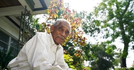
A photograph published in the Cocoa Tribune in 1957 showed the elderly pioneer seated beneath a tree at the residence, reflecting a quieter stage of life following decades of physical labor. Even in these later years Sawyer remained widely known throughout Brevard County as one of Merritt Island’s earliest Black settlers.
Although his pace of life had slowed, Sawyer’s reputation continued to grow. Community members recognized him as a man who had helped build farms, churches, schools, and fraternal institutions during a formative period in the island’s history.
14. The Celebration of His Ninetieth Birthday
In February 1964, residents of Brevard County celebrated an extraordinary milestone in Dennis Sawyer’s life: his ninetieth birthday. Newspaper coverage from the time highlighted the remarkable longevity of a man who had spent most of his life working the land and waterways of Merritt Island.[18]
The article described Sawyer as a pioneer resident whose life stretched back to the early days of settlement in the Indian River region. By that time he had witnessed the transformation of Brevard County from a sparsely populated agricultural frontier into a rapidly developing modern community.
Photographs published in connection with the celebration showed Sawyer proudly holding an American flag, symbolizing both his citizenship and his long residence in the United States. Having immigrated from the Bahamas decades earlier, he had become a respected member of the community he helped build.
For many residents the celebration served as a reminder of the island’s early history. Sawyer represented a living link to the generation of settlers whose labor had laid the foundations of Merritt Island’s farms, churches, and schools.
15. Death and Legacy
Only a few months after the celebration of his ninetieth birthday, Dennis Sawyer passed away in July 1964 on Merritt Island in Brevard County, Florida.[19] His death marked the passing of one of the island’s earliest and most influential Black pioneers.
Funeral services were held locally, and Sawyer was laid to rest in Dennis Sawyer Memorial Park and Cemetery on Merritt Island, a burial site that bears his name and continues to commemorate his legacy.[19]
Over the years his contributions have been remembered through local historical efforts and community recognition. A historical marker erected near Mt. Olive A.M.E. Church honors Sawyer’s role in establishing the congregation, building community institutions, and helping shape the development of Merritt Island.[13]
Today Dennis Sawyer stands as an example of the determination and resilience of Bahamian migrants who helped build Florida’s east coast communities. Arriving as a young immigrant laborer in the late nineteenth century, he transformed his life through hard work, entrepreneurship, faith, and civic leadership.
His story reflects a broader chapter in Florida history—one in which Caribbean migrants, Black farmers, church leaders, and fraternal organizations worked together to create thriving communities despite the obstacles of segregation and limited economic opportunity.
More than a century after his arrival in Brevard County, Dennis Sawyer remains remembered as a farmer, boatman, church founder, Mason, and community leader whose life helped shape the history of Merritt Island.
Sources
[1] 1900 United States Federal Census, Rockledge, Brevard County, Florida, Enumeration District 1800, Sheet 4, Dwelling 99, Family 101, household of Dennis Sawyer.
[2] Birthplace and immigration information for Dennis Sawyer derived from the 1900 United States Federal Census, Rockledge, Brevard County, Florida (listing birth in the Bahamas and immigration during the 1890s).
[3] 1900 United States Federal Census, Rockledge, Brevard County, Florida, household of Dennis Sawyer (Dennis Sawyer, Rebecca Sawyer, and daughter Ida Sawyer).
[4] 1930 United States Federal Census, Merritt, Brevard County, Florida, Dwelling 55, Family 55, Dennis Sawyer household (listing Lucy Sawyer and Ruben Sawyer).
[5] Petition for Naturalization, Edwin Dennis Sawyer, Circuit Court of Brevard County, Florida.
[6] 1950 United States Federal Census, Brevard County, Florida, Highway No. 3, Dwelling 111, Dennis Sawyer household (occupation listed as citrus grower).
[7] The Florida Star (Titusville, Florida), January 8, 1909, listing Dennis Sawyer as a launch operator on the Indian River.
[8] Historical accounts summarized on the “Legacy of Dennis Sawyer” Florida Historical Marker, describing Sawyer’s operation of the tug Mystic and transport of citrus barges to Cocoa.
[9] The Cocoa Tribune (Cocoa, Florida), January 3, 1934, article referencing Dennis Sawyer transporting produce by wagon drawn by his mule.
[10] 1930 United States Federal Census, Merritt, Brevard County, Florida, property valuation for Dennis Sawyer’s farm.
[11] Cocoa Lodge No. 55, Prince Hall Free and Accepted Masons, Brevard County, Florida, membership listing for Dennis Sawyer.
[12] Historical marker description noting Dennis Sawyer as a 33rd degree Mason.
[13] “The Legacy of Dennis Sawyer,” Florida Historical Marker F-1091, Brevard County Historical Commission, Merritt Island, Florida.
[14] The Evening Tribune (Cocoa, Florida), November 4, 1955, article honoring Dennis Sawyer at Mt. Olive A.M.E. Church.
[15] The Evening Tribune (Cocoa, Florida), September 17, 1942, article referencing transportation of Merritt Island school children by boat.
[16] The Cocoa Tribune (Cocoa, Florida), April 18, 1928, article referencing Merritt Island agricultural production including Dennis Sawyer.
[17] The Cocoa Tribune (Cocoa, Florida), October 9, 1957, article titled “Dennis Sawyer Works On Old Folks Home.”
[18] The Evening Tribune (Cocoa, Florida), February 19, 1964, article titled “Dennis Sawyer Observes Ninetieth Birthday Saturday.”
[19] The Evening Tribune (Cocoa, Florida), July 22, 1964, obituary and funeral notice for Dennis Sawyer.
