
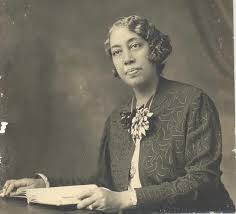
Blanche Mae Armwood Washington (1890–1939)
Introduction: A Statewide and National Figure
Blanche Mae Armwood Washington occupies a singular place in Florida’s early twentieth-century Black leadership, distinguished not only by her intellectual achievements but by the breadth of her institutional reach. Although most closely associated with Tampa, her influence extended across Florida and the American South, including sustained engagement in Jacksonville, at a time when formal civil-rights organizations such as the Urban League and NAACP had uneven or developing local footprints. In this fragmented environment, Armwood worked through statewide educational systems, women’s organizations, fraternal institutions, and national political networks, positioning herself as a bridge between local Black communities and national reform efforts [1].
Her career encompassed education reform, industrial and vocational training, women’s fraternal leadership, Urban League administration, Republican Party advocacy, and national anti-lynching campaigns. Rather than relying solely on protest, Armwood devoted her life to constructing durable institutions—schools, civic organizations, political networks, and professional pathways—that could endure within the constraints of Jim Crow segregation.
Family Background and Institutional Formation
Blanche Mae Armwood was born on January 23, 1890, in Tampa, Florida, to Levin Armwood Jr. and Margaret Holloman, into a family already recognized for civic leadership and public responsibility. Her father, Levin Armwood Jr., is historically recognized as Tampa’s first African American police officer, later serving as a deputy sheriff in Hillsborough County. He also held posts as Supervisor of County Roads and supervisor of Mt. Zion School, placing the Armwood household at the center of education, law enforcement, and local governance [2][3].
Her extended family reinforced this institutional culture. Her uncle, George P. Norton, was a prominent physician whose career spanned Apalachicola, Hibernia, and Tampa. Norton was also a major Black businessman and the founder of Central Life Insurance Company of Florida, one of the most significant African American insurance enterprises in the state. His work demonstrated how professional expertise, fraternal affiliation, and business leadership could be combined to create economic stability under segregation [4].
Her cousin, Carl Norton, born in Hibernia, Florida, became a dentist, businessman, and intellectual figure noted in contemporary accounts for exceptional linguistic ability—reportedly speaking seven languages—and for his broad professional and commercial engagement. Collectively, these family connections linked Tampa to other Black centers across Florida and instilled in Blanche Armwood a regional, institutional vision of leadership rather than a purely local one [5].
Early Education and Exceptional Achievement
Armwood’s parents, having been denied full educational opportunity themselves, ensured that their youngest child received rigorous early schooling. She attended St. Peter Claver Catholic School, graduating with honors in 1902. That same year, at just twelve years old, she passed Florida’s State Uniform Teacher’s Examination, an extraordinary accomplishment for any child, and particularly for a Black girl in Jim Crow Florida [6].
Because Tampa had no public high school for Black students, Armwood was sent to Spelman Seminary in Atlanta, Georgia. There she excelled in English and Latin, graduating summa cum laude in 1906 and earning a formal teaching certificate. Her classical education placed her among the most academically prepared Black women educators of her generation [7].
Teaching Career, Marriage, and Moral Independence
Returning to Tampa, Armwood entered the Hillsborough County public-school system, where she taught for seven years. In 1913 she married attorney Daniel Webster Perkins and relocated briefly to Knoxville, Tennessee. The marriage was annulled the following year, and Armwood returned to Tampa and resumed her professional life without retreat or reputational loss. Her decision reflected an independence and moral clarity that would characterize her public career [8].
Industrial Education, Gas Companies, and Vocational Reform
Armwood’s reform work expanded significantly in 1914 when the Tampa Gas Company, working with the Hillsborough County Board of Education and the Colored Ministers Alliance, commissioned her to organize an industrial arts school for Black women. This partnership produced the Tampa School of Household Arts, which trained women in domestic science and the use of modern gas appliances, aligning vocational education with technological change [9].
The school’s success was immediate; within its first year, more than two hundred women earned certificates. Armwood went on to establish similar schools in Roanoke, Virginia; Rock Hill, South Carolina; Athens, Georgia; and New Orleans, Louisiana, making her a regional leader in industrial education [10].
During World War I, she published Food Conservation in the Home (1918), a widely circulated cookbook emphasizing efficiency, patriotism, and civic duty. The work framed domestic labor as national service, asserting that household management was integral to national survival during wartime [11].
Grand Secretary, Order of the Eastern Star, and the Jacksonville Masonic Temple
While serving as Grand Secretary of the Bethlehem Grand Chapter, Order of the Eastern Star, Armwood played a significant role in Masonic institutional development in Jacksonville. Newspaper accounts document her participation in fundraising and organizational efforts connected to the Jacksonville Masonic Temple, a central civic institution within the city’s Black community.
On January 29, 1913, the Jacksonville Journal reported that Armwood delivered a formal address at the grand opening and dedication of the Jacksonville Masonic Temple, confirming her role as a principal speaker rather than a peripheral participant [12]. Her involvement continued into the following decade; a January 13, 1917 Jacksonville Journal notice again listed her among prominent Eastern Star leaders active in Jacksonville’s Masonic life [13].
At a time when Jacksonville’s Urban League had not yet been established, the Masonic Temple functioned as a civic anchor, hosting educational programs, political discussion, and community organizing. Armwood’s work there reflected her broader conviction that institutional permanence was essential to racial advancement.
Urban League Leadership and Educational Administration
In 1922, Armwood was nominated by National Urban League officials as the first Executive Secretary of the Tampa Urban League. Under her leadership, the organization established a public playground, a daycare center, and a kindergarten for Black children, and played a key role in developing affordable housing opportunities [14].
She was soon appointed Supervisor of Negro Schools for Hillsborough County, a position she held from 1926 to 1934. During this tenure, she oversaw the construction of new school buildings, improvements to existing facilities, increased teacher salaries, organized parent-teacher associations, and extended the Black school year from six to nine months. She also spearheaded the establishment of Booker T. Washington School, which became the county’s first accredited Black high school [15][16].
National Advocacy, Anti-Lynching Campaigns, and Republican Networks
Armwood’s influence extended beyond Florida through her work with national organizations. She served as Chair of the Home Economics Department of the National Association of Colored Women, as a national campaign speaker within Republican Party networks, and as a state organizer for the NAACP in Louisiana [17].
She participated actively in anti-lynching campaigns, traveling nationally in the aftermath of racial violence in the late 1910s and early 1920s. She worked closely with Mary McLeod Bethune, assisting in fundraising and institutional support for Black schools and women’s initiatives, while advocating federal accountability for racial violence [18].
Armwood’s alignment with national Republican networks placed her within the upper echelon of Black Republican leadership during the interwar period. Her relationship with Calvin Coolidge, whose presidency shaped Republican policy in the 1920s, connected her to influential reform circles. Although Coolidge died in 1933, Armwood’s earlier association with the networks surrounding his administration enhanced her access to national platforms and reinforced her stature as a trusted party advocate [19].
Legal Education and Final Years
Committed to political and legal reform, Armwood enrolled at Howard University Law School in 1934. She earned her Juris Doctor in 1938, becoming the first African American woman from Florida to graduate from an accredited law school [20].
In her final years, she remained active as a lecturer and advocate within national networks. While traveling on a speaking engagement in Medford, Massachusetts, she became ill and died on October 16, 1939. She was buried in her family’s plot at L’Unione Italiana Cemetery in Tampa [21].
Legacy
Blanche Mae Armwood Washington’s legacy is institutional rather than symbolic. She reshaped Black education in Hillsborough County, helped inaugurate the Jacksonville Masonic Temple, strengthened Urban League infrastructure, advanced vocational education across multiple states, and occupied elite political networks rarely accessible to Black women of her era. Her memory endures through Armwood High School, historical markers, and the institutions she helped build—structures designed not merely to resist exclusion, but to outlast it.
References
[1] Keith Halderman, “Blanche Armwood of Tampa and the Strategy of Interracial Cooperation,” Florida Historical Quarterly 74, no. 3 (1996).
[2] Michele Alishahi, For Peace and Civic Righteousness (University of South Florida, 2003).
[3] Florida Department of Transportation, Cultural Resource Assessment Survey Report (2001).
[4] Paul Guzzo, Tampa Bay Times, July 8, 2020.
[5] University of South Florida Library, Armwood Family Papers.
[6] TampaPix, “Blanche Armwood.”
[7] Mary Burke, “The Success of Blanche Armwood (1890–1939),” Sunland Tribune 15 (1989).
[8] David H. Jackson Jr. and Canter Brown Jr., Go Sound the Trumpet! (2005).
[9] Monthly Bulletin, 1917.
[10] Tampa Gas Company and Hillsborough County Board of Education records.
[11] Blanche Armwood, Food Conservation in the Home (1918).
[12] Jacksonville Journal, January 29, 1913, p. 17.
[13] Jacksonville Journal, January 13, 1917, p. 19.
[14] Urban League of Tampa historical records.
[15] Hillsborough County School Board reports.
[16] Booker T. Washington School historical markers.
[17] National Association of Colored Women records.
[18] Bethune Foundation materials; NAACP campaign records.
[19] Republican Party historical accounts, 1920s–1930s.
[20] Howard University School of Law alumni records.
[21] L’Unione Italiana Cemetery records.
