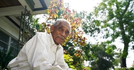
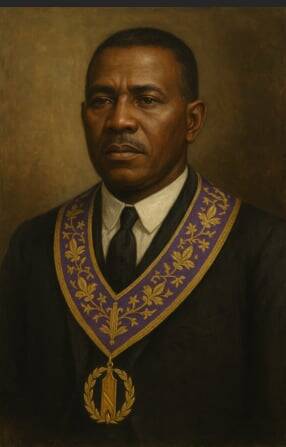
John R. Hall (c. 1866–1946): Operative & Speculative Builder of Tampa
By Jerry Urso, FPS-Life
African Americans literally helped build Florida’s cities in the late nineteenth and early twentieth centuries, and the life of John Robert Hall makes that truth visible in Tampa. Born in Mississippi in the late 1860s—recorded as May 1869 in one listing and c. 1866 in a later one—he came to Florida in the 1890s and settled in the Port Tampa/Tampa area, where skill and reliability carried him from day labor to foreman. [1][4]
By 1900, he already owned a home at 324 Elliott Street in Port Tampa; his wife, Cora, kept house, and two daughters, Julia and Bertrice, filled the rooms. He could read and write, spoke English, and the census marks the home as a house (H)—owned, not a farm. [1] That literacy, together with shop-floor experience, later allowed him to keep pace in rooms filled with doctors, lawyers, judges, and church leaders. [1]
By 1920, the household stood at 2609—listed as Desoto/Orlee (also Durham Street)—near the docks, the home mortgage-free. Hall worked as a stevedore, learning the port’s clock—tides, ship schedules, and loading windows. Cora remained at his side, with their grown daughter Beatrice (Dampier) and her husband Lee sharing the house with John R., Jr. [2]
In 1930, the address appears as 2609 Durham Street—the same location under a standardized street name—owned and valued at $3,000. Hall is listed as a pile driver for the Sand Shell Company, with Carrie now his wife and John R., Jr. still at home. [3] In 1940, he is recorded as a construction foreman at the same address (home value $2,000), reporting forty hours worked the previous week and twenty-six weeks in 1939. His schooling is recorded as second grade, and the household includes Carrie, John P., and wife Etta, and Carrie Harris, a step-daughter. [4] After the loss of Cora, Hall married Carrie, a change reflected in the 1930 and 1940 listings. [3][4]
Builder and Foreman
Hall moved from cargo to foundations. He specialized as a pile driver, planting the hidden forests that hold up bridges, docks, and buildings—work demanding precise measurement, judgment about soil and water, staged rigging, and strict attention to safety. From there the step to construction foreman followed naturally: reading plans, sequencing trades, ordering materials, watching weather and tide, and keeping crews intact. Newspapers of the day described him as “much in evidence,” meaning he was regularly seen at meetings, ceremonies, and public works where decisions were made. [5]
Local history preserves assignments that fix his craft to Tampa’s physical landscape. He worked on the Garcia Street Bridge, where shifting alluvial sands made foundation work especially difficult; as foreman, he was entrusted with the blueprints, and “all of the dozens of men employed on the enterprise followed directions laid down by the gifted builder.” He supervised underpinning at the Citizens Bank Building at Franklin and Zack Streets, where unstable soil required careful protection of neighboring foundations; when conditions demanded, he shifted crews to another structure and returned to complete the work once the site could be secured.
His reach extended beyond Tampa. In Fort Myers, Hall superintended the laying of the foundation for the Edison Memorial Bridge across the Caloosahatchee River, directing crews to drive piling for 128 spans in 125 days—“exactly one span per day.” The bridge opened in 1926. [14]
Brown and Allen also note the character of his knowledge: much of it was “picked up” across nearly half a century of continuous construction work—often with Bay Dredging Company—and Hall was known as a practical instructor who trained men preparing for construction jobs, including a season with a large South Florida construction company based in Tampa. Informants remembered him loading boats bound for Cuba during the Spanish–American War and later serving as Head Stevedore for federal forces. [14] An obituary later reduced that long arc to a single line: Hall had been a pile driver for Bay Dredging Company for forty years. [15]
Masonic Service (MWUGL of Florida)
Hall’s civic identity deepened through the Most Worshipful Union Grand Lodge of Florida (Prince Hall Affiliation). In Port Tampa, he presided as Worshipful Master of Wayfarer Lodge No. 104, responsible for opening and closing the lodge, setting agendas, examining candidates, enforcing bylaws, and stabilizing finances and minutes. [11][12]
In 1907, he served on the Grand Lodge Committee on Credentials, the body charged with verifying voting delegates and examining lodge returns and dues. In 1910, he sat on the Masonic Benefit Association board, where careful accounting determined premiums, claims, and relief payments. [11][13] By 1915, the Tampa Times identified him as Junior Grand Warden and noted that he was a 33° Mason, placing him among the jurisdiction’s senior officers responsible for district visits, committee reports, and order on the Grand Lodge floor. His obituary later confirmed the 33rd degree and added Harlem Temple Shrine membership. [5][15]
The 1907 Proceedings illustrate the company he kept: Grand Master John H. Dickerson, 33°, alongside deputies, wardens, treasurer, and secretary—an officer corps that included doctors, lawyers, judges, and church leaders. Set beside the census line recording only second-grade formal schooling, Hall’s advancement stands as its own evidence. He possessed the literacy, discipline, and judgment required to manage people, procedure, and money at the highest levels of the Craft. [4][11][13][5]
Public Life and the 1912 Progressive (“Bull Moose”) Effort
Hall appears “much in evidence” in Tampa’s civic columns in 1912 and 1922, and on the Grand Lodge floor between 1907 and 1910—a pattern of engagement when neighborhood concerns intersected with city policy, including streets and drainage, school upkeep, wages on public works, and the frictions of permits and inspections. [7][8][11][12][13]
On July 21, 1912, the Tampa Tribune carried a call to organize the Progressive Party in Tampa and listed John R. Hall among those connected to the effort. [6] The national Progressive program—clean administration, direct primaries, labor protections, social insurance, women’s suffrage, and stronger oversight of corporations—resonated in a working port city. Theodore Roosevelt’s relationship with Booker T. Washington lent the movement credibility for some Black observers, even as the restriction of Southern Black delegates at the 1912 convention revealed its limits. Locally, the movement peaked that year and faded by the mid-1910s. [6]
Tampa’s Urban League
By the mid-1930s, the Tampa Times reported that “Urban League divisions [were] set,” signaling an active, committee-driven local organization. [10] For families in port neighborhoods, the Urban League offered practical ladders: job placement, vocational training, housing assistance, and youth programs. Hall’s experience overlapped directly with these efforts. As a foreman, he knew who was hiring and what it took to keep steady work; as a lodge officer, he understood minutes, budgets, and rules.
The same newspapers and Grand Lodge proceedings that place him “much in evidence” situate him within a civic network where church committees, fraternal lodges, and League workers collaborated to move neighbors toward safer conditions and reliable wages. [5][11][12][13] Tampa’s reform circle included Blanche Armwood in Urban League and fraternal work, and Hall’s committee service intersected with figures such as Levin Armwood and George P. Norton during overlapping Grand Lodge sessions. [11][12][13]
Legacy
Seen as a whole, Hall’s life stands at the intersection of the operative and the speculative. Operatively, he left timber and concrete in the ground—piling and foundations beneath bridges, wharves, and buildings; underpinning that kept walls standing; job sites paced to the port’s clock; and a mortgage-free home at 2609 Durham Street that anchored his family. [2][14]
Speculatively, he shaped meetings and men: a Worshipful Master who opened and closed lodge with order, a Junior Grand Warden named in the press, and a 33° Mason and Shriner trusted to keep rules, ledgers, and tempers steady. [11][12][5][15]
The record of work is tangible. He mastered difficult ground—shifting sands at the Garcia Street Bridge and delicate underpinning at the Citizens Bank Building—and carried those skills to the Edison Memorial Bridge in Fort Myers, where crews under his direction drove piling for 128 spans in 125 days. [14] Long memories in Tampa recalled him loading boats for Cuba in wartime and later serving as Head Stevedore for federal forces. [14] His obituary compressed four decades into a single sentence: pile driver for Bay Dredging Company for forty years; 33rd degree Mason; Harlem Temple Shrine. [15]
His speculative legacy moved through institutions. In lodge rooms, he served where credentials are tested, and benefit funds kept sound—places where literacy, arithmetic, and judgment determined whether a widow was paid and who held a vote. [11][13] On the Grand Lodge dais, he stood among doctors, lawyers, judges, and church leaders, proving by practice that a man recorded with second-grade schooling could meet them as a peer in procedure and principle. [4][11][5] In civic life—from the 1912 Progressive moment to committee work supporting the Tampa Urban League—he translated a foreman’s habits into public service: set the agenda, hear the petition, sign the voucher, and put people to work. [6][10][5]
Mentorship threads the two legacies together. Brown and Allen describe knowledge accumulated across nearly fifty years and passed on—Hall as a practical instructor who trained men entering construction, translating shop experience into lasting careers. [14] The continuity of 2609 Durham Street—appearing in 1920, 1930, and 1940 with children and kin under the same roof—speaks to the stability that work made possible. [2][3][4]
After the loss of Cora, Hall married Carrie, and the household retained its shape—another measure of how he built structures meant to last. [3][4]
Call the result what Masons would: operative in the piles below the waterline and the beams beneath the roof; speculative in the minutes, votes, and care for people that hold a community together. Read across census entries, lodge proceedings, and clipped columns, the evidence is consistent—house held, bridges set, crews led, minutes kept—a life, in the newspapers’ language, “much in evidence.” [1][2][3][4][5][11][12][13][14][15]
References
[1] United States Bureau of the Census. 1900 United States Federal Census. Hillsborough County, Florida, Port Tampa, sheet 30, dwelling 615, family 633, entry for John Hall.
[2] United States Bureau of the Census. 1920 United States Federal Census. Tampa Ward 10, 2609 Desoto/Orlee Street, household of John R. Hall.
[3] United States Bureau of the Census. 1930 United States Federal Census. Tampa Ward 7, 2609 Durham Street; home value $3,000; occupation “pile driver,” Sand Shell Company.
[4] United States Bureau of the Census. 1940 United States Federal Census. Tampa, 2609 Durham Street, sheet 2B, household 37, entry for John R. Hall Sr.
[5] Tampa Times (Tampa, FL). “B. W. Wiley Lodge No. 317,” January 28, 1915, p. 103.
[6] Tampa Tribune (Tampa, FL). “Progressive Party Organizing in Tampa,” July 21, 1912, p. 15.
[7] Tampa Daily Times (Tampa, FL). City and club notices including John R. Hall, January 23, 1912, p. 12.
[8] Tampa Times (Tampa, FL). Community column mentioning John R. Hall, October 7, 1922, p. 5.
[9] Tampa Tribune (Tampa, FL). “Realty Transfers,” November 1, 1929, p. 17.
[10] Tampa Times (Tampa, FL). “Urban League Divisions Set,” June 12, 1936, p. 9.
[11] Most Worshipful Union Grand Lodge of Florida (Prince Hall Affiliation). Proceedings of the Annual Communication, 1907 (Tampa).
[12] Most Worshipful Union Grand Lodge of Florida (Prince Hall Affiliation). Proceedings of the Annual Communication, 1908.
[13] Most Worshipful Union Grand Lodge of Florida (Prince Hall Affiliation). Proceedings of the Annual Communication, 1910.
[14] Canter Brown Jr. and Barbara Allen. “Hall.” In Family Records of the African American Pioneers of Tampa and Hillsborough County, 97–99.
[15] Tampa Tribune (Tampa, FL). “Negro Worker Dies,” July 16, 1946, p. 2.
